Questions and studies
Focused articles on symbols, books, traditions and study practices. Each text includes examples, sources and versions in three languages.
No articles match this filter.
Occultism, esotericism and witchcraft: what differs?
Occultism, esotericism and witchcraft overlap in some settings, but they do not name one religion. A useful distinction identifies who uses the term, when, and for what purpose. A book can belong to more than one research category without defining the religious identity of its readers.
Natural witchcraft for beginners: an observation notebook
An observation notebook can support the study of natural witchcraft without collecting plants or treating symbolic correspondences as physical measurements. Record what you can observe, identify the plant through a reliable reference, and keep cultural attribution separate from your own interpretation of the setting.
Witchcraft books for beginners: choosing a tradition
Choose a witchcraft book by the question you want to answer: consulting terms, exploring a particular practical approach or studying an author’s perspective. Works by Doreen Valiente and Gerald Gardner provide different entry points into literature associated with modern Wicca, rather than three universally separate traditions.
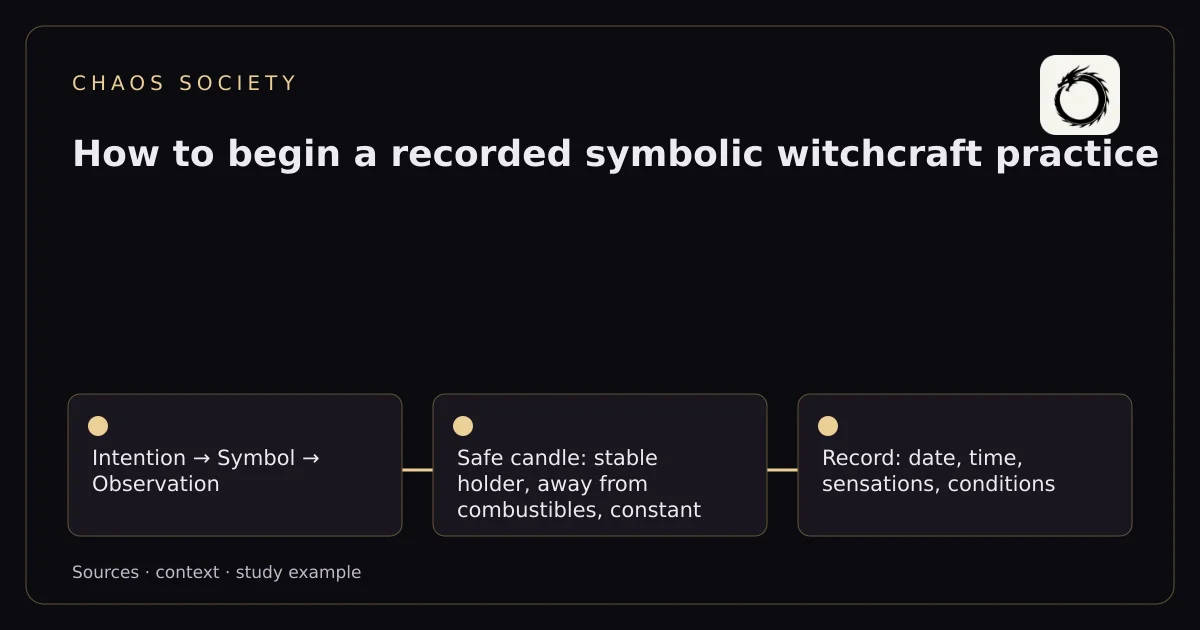
How to begin a recorded symbolic witchcraft practice
To begin a symbolic witchcraft practice, clearly define your intention, choose a symbol that represents it, and systematically record observations, using a safe candle or LED alternative and keeping the activity within a didactic scope, not initiatory.
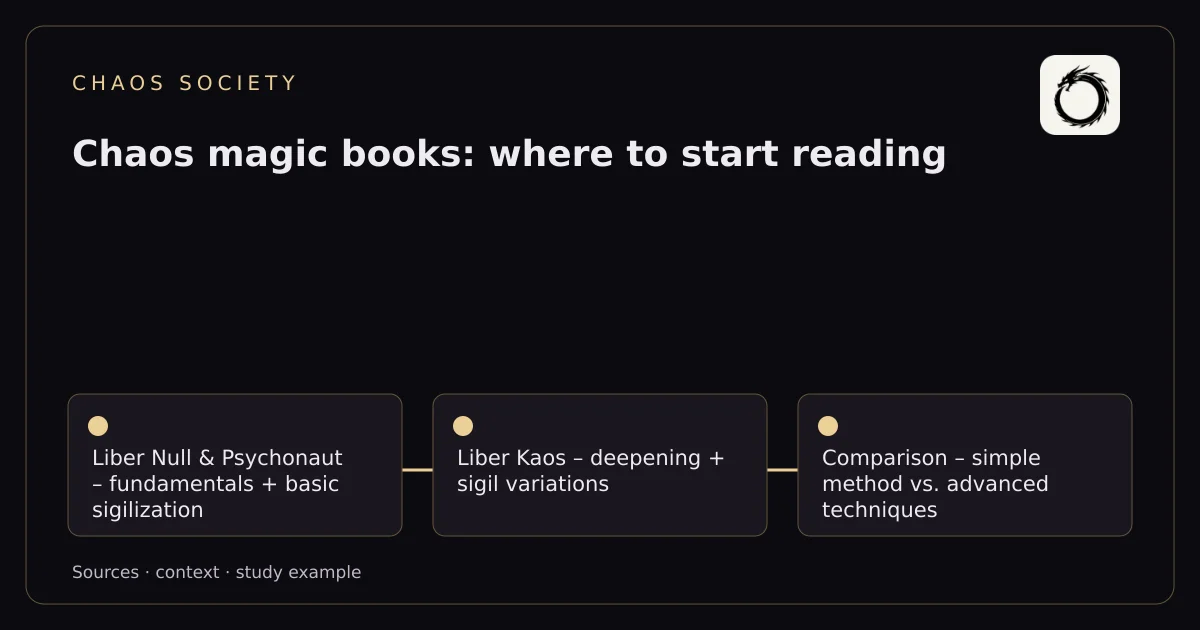
Chaos magic books: where to start reading
Compare chaos magic books by authorship, purpose and edition. Peter J. Carroll’s Liber Null & Psychonaut and Liber Kaos provide reference points: choose a question and inspect how each work addresses it, without turning a reading list into a promise of results.

Chaos magic practice: planning and reviewing an exercise
A small chaos magic exercise can be planned around one personal question, one method and a clear record. The example here concerns organizing study. It is an editorial proposal for examining practice, not proof of supernatural causation or an instruction attributed word for word to Carroll or Spare.
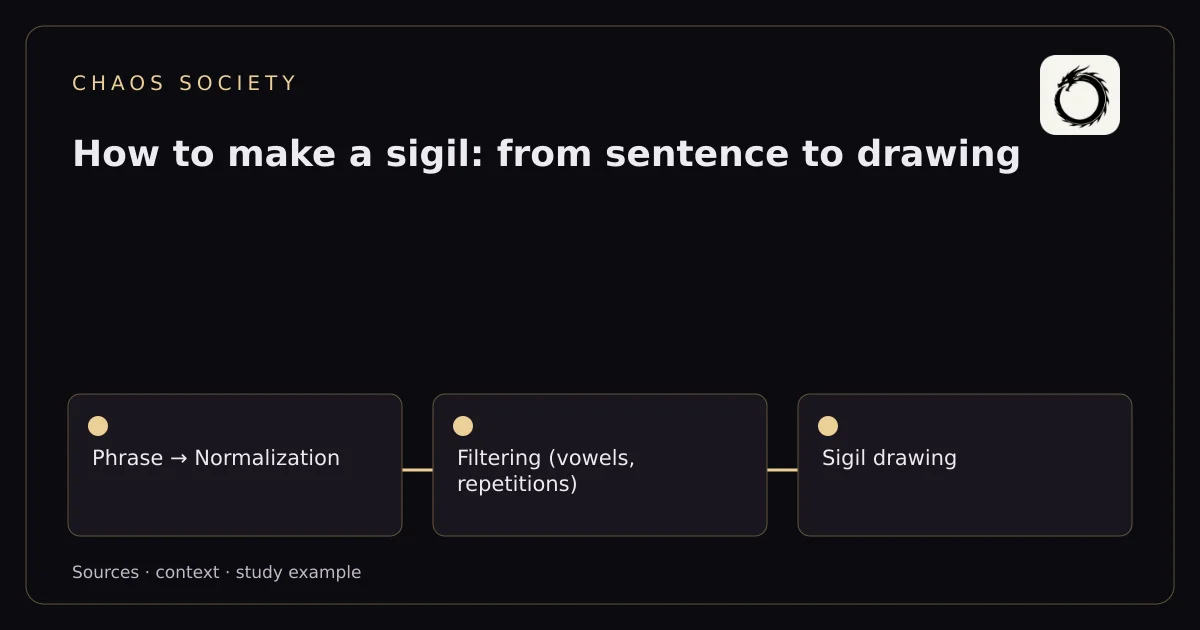
How to make a sigil: from sentence to drawing
To transform a phrase into a sigil, remove the spaces, normalize the letters, eliminate vowels and repetitions keeping the order; the result can be stylized with lines or using the sigil generation wheel. Record the rule used.
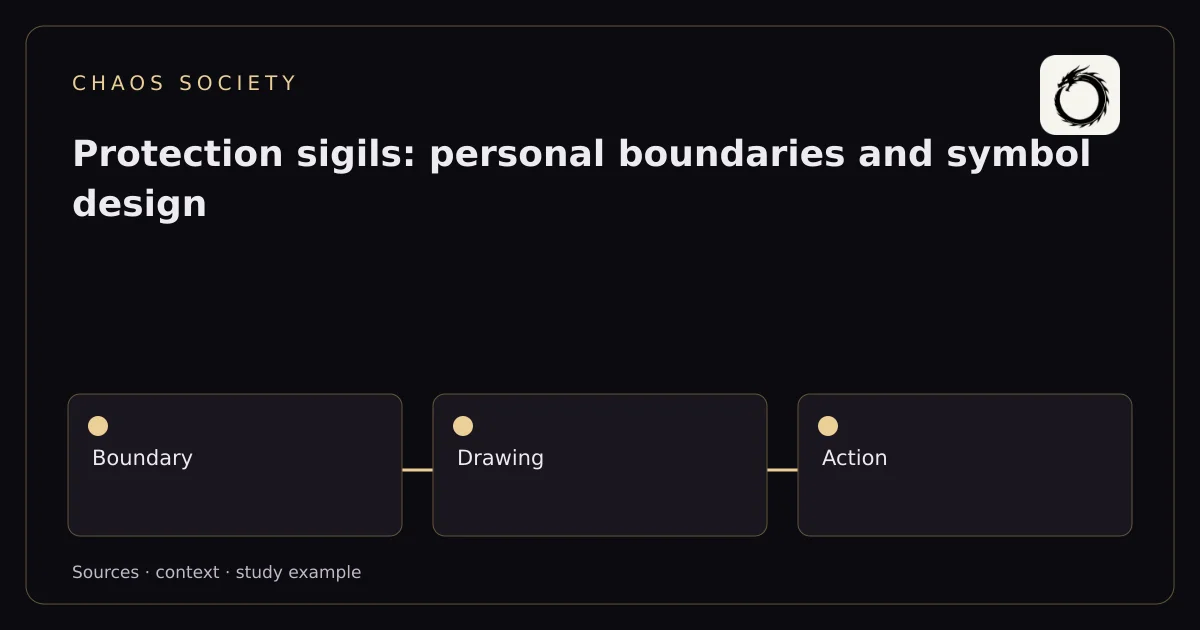
Protection sigils: personal boundaries and symbol design
A protection sigil can represent a personal boundary through a drawing and a written intention. Its meaning belongs to the maker’s symbolic practice. The design does not establish an invisible barrier, store measurable energy or replace physical safety, digital privacy or appropriate support when a threat is real.
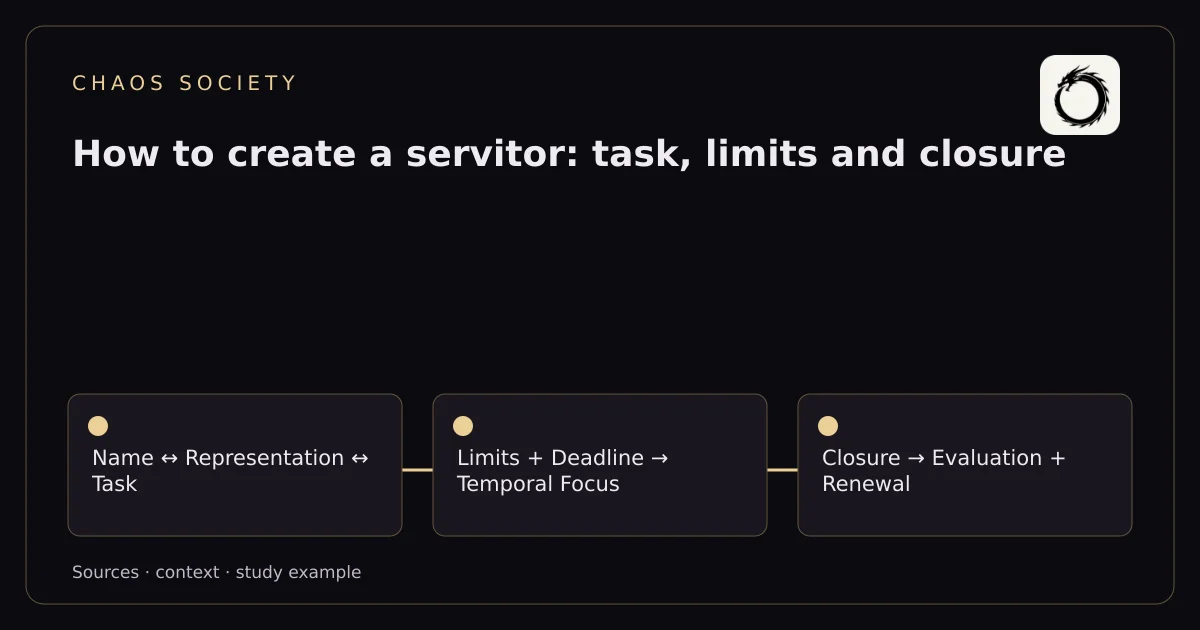
How to create a servitor: task, limits and closure
A magic servitor is a symbolic project that brings together a name, representation, unique task, temporal limits and a method of closure, serving as a focus of personal intention without involving manipulation of others or tulpa concepts.
Yes-or-no tarot: questions, interpretation and limits
Yes-or-no tarot is an interpretive convention, not an objective test of the future. Decide what your reading is meant to explore before drawing. The public tool offers one or three cards; it does not provide a scientifically validated binary prediction or make personal decisions for its reader.
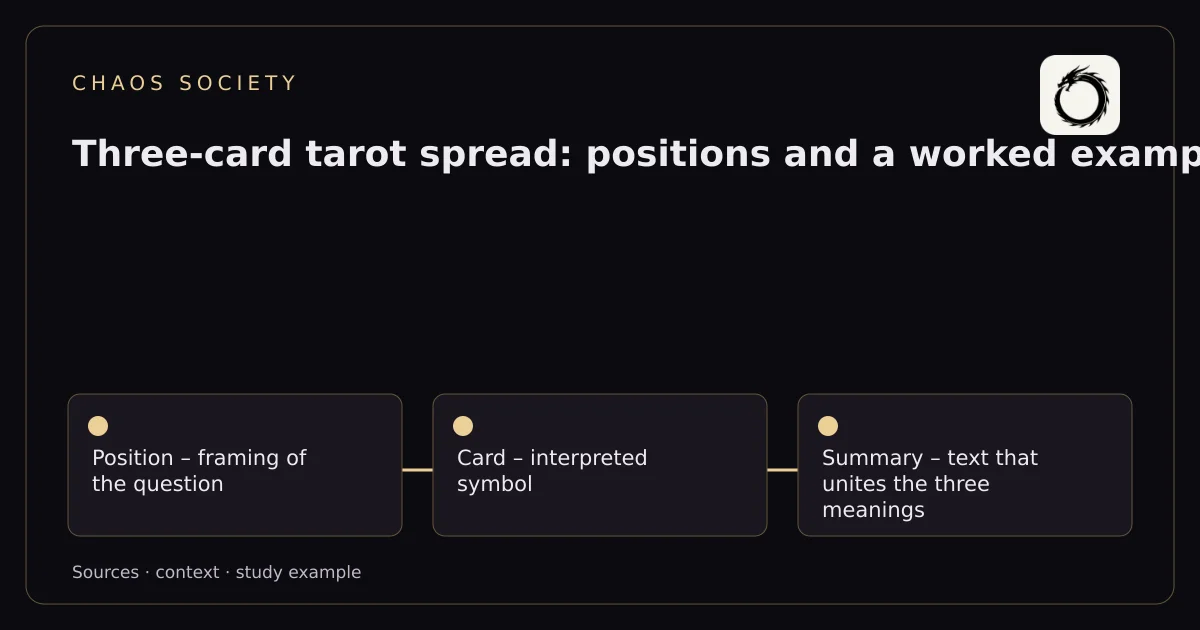
Three-card tarot spread: positions and a worked example
In the three-card spread, the three positions – current situation, future possibility, and next step – are defined before the cards are chosen, and each card is interpreted within its function, without claiming a universal model.

Tarot de Marseille and Rider–Waite–Smith: comparing decks
To compare the Marseille Tarot and the Rider-Waite-Smith, look at the illustrations of the Minor Arcana, the numbering and names of the cards, and the accompanying manual for each edition; each deck follows its own visual conventions.

How to read tarot cards beyond memorized keywords
Effective reading starts with observing the image, recognizing the deck used, paying attention to the card’s position, and building a hypothesis that unites these elements, without needing to memorize fixed lists of meanings.
Three-card Lenormand spreads: order and combinations
A three-card Lenormand reading needs an explicit convention: decide how the positions and adjacent cards relate before interpreting them. The example below uses the middle card as a focus and the outer cards as context. It is one study method, not a universal rule or a factual prediction.
Lenormand vs tarot: cards, spreads and reading methods
Petit Lenormand commonly uses 36 cards, while the standard tarot pack has 78. The difference concerns structure and reading conventions, not a measurable hierarchy of accuracy. Identify the actual deck and its instructions before borrowing meanings from another system.

Spiritual protection at the front door: symbols and home care
Spiritual protection at the front door is based on the conscious choice of a domestic symbol, with the consent of all residents, and on keeping the passage and lock free of physical obstacles or ritual items such as salt or fire.
Personal spiritual protection: boundaries and a journal exercise
A personal spiritual protection exercise can serve as a symbolic record of boundaries and choices. Its meaning depends on the practice adopted. A drawing or object does not establish an invisible barrier, and the exercise should remain connected to concrete action when there is a real concern.
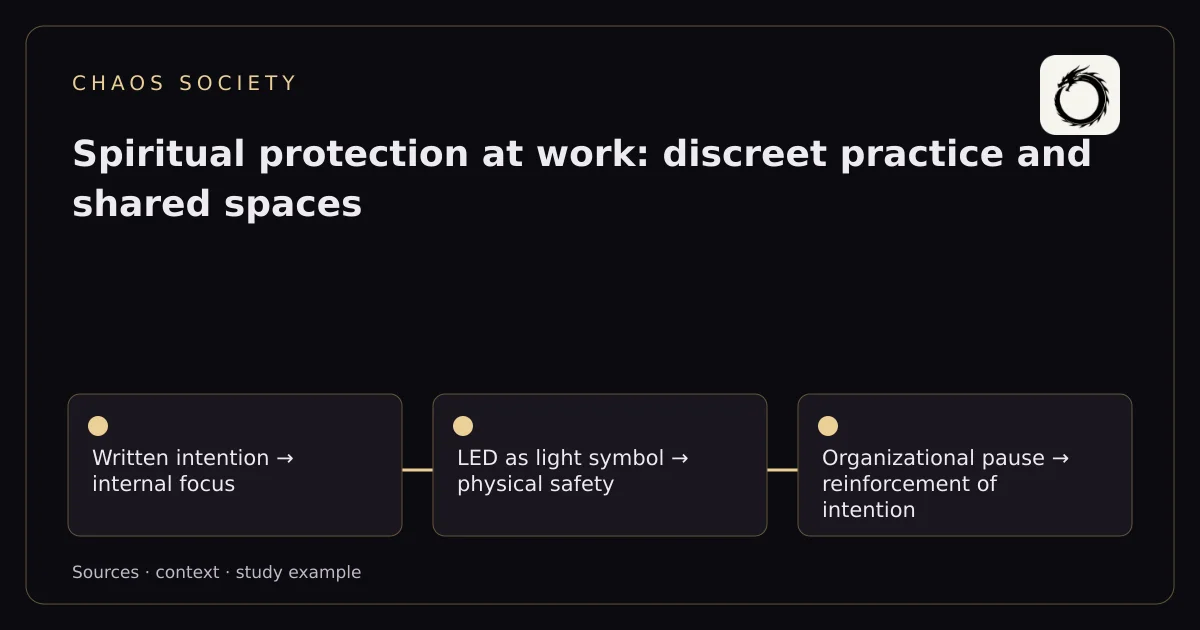
Spiritual protection at work: discreet practice and shared spaces
It is possible to create a symbolic protection routine in the workplace without using fire, smoke, or substances, maintaining discretion and respect for the collective space, while recognizing the difference between personal belief and concrete safety measures.
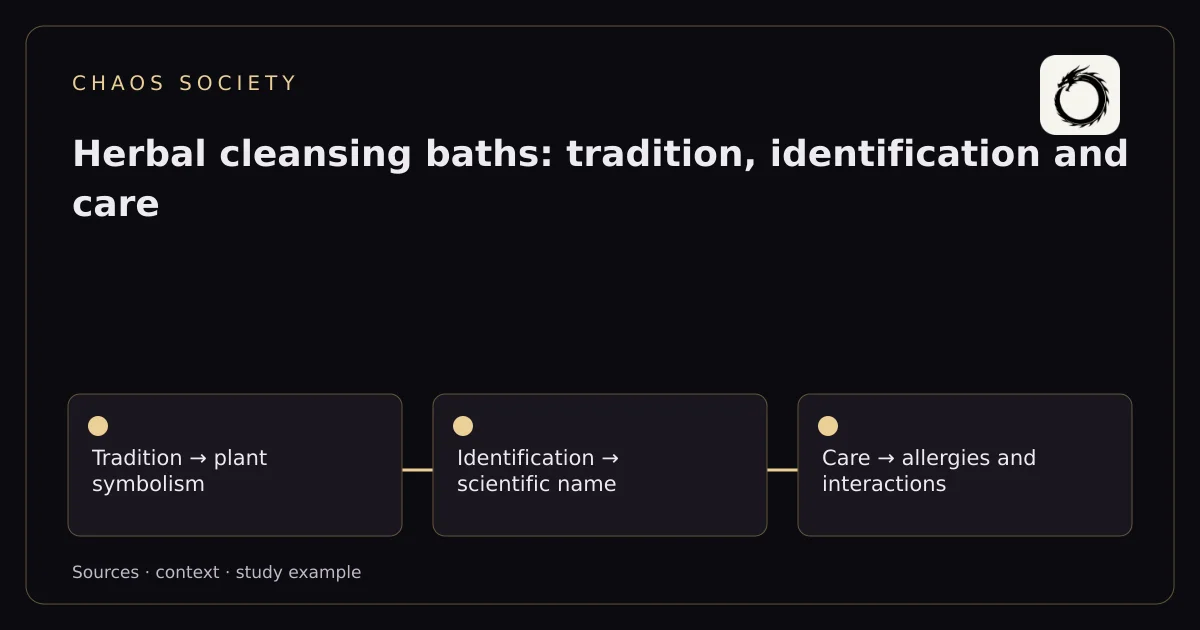
Herbal cleansing baths: tradition, identification and care
To analyze a herb bath recipe, check the associated tradition, confirm the botanical species by its scientific name, and consider possible skin reactions or interactions, using plain water as a symbolic alternative when doubts arise.
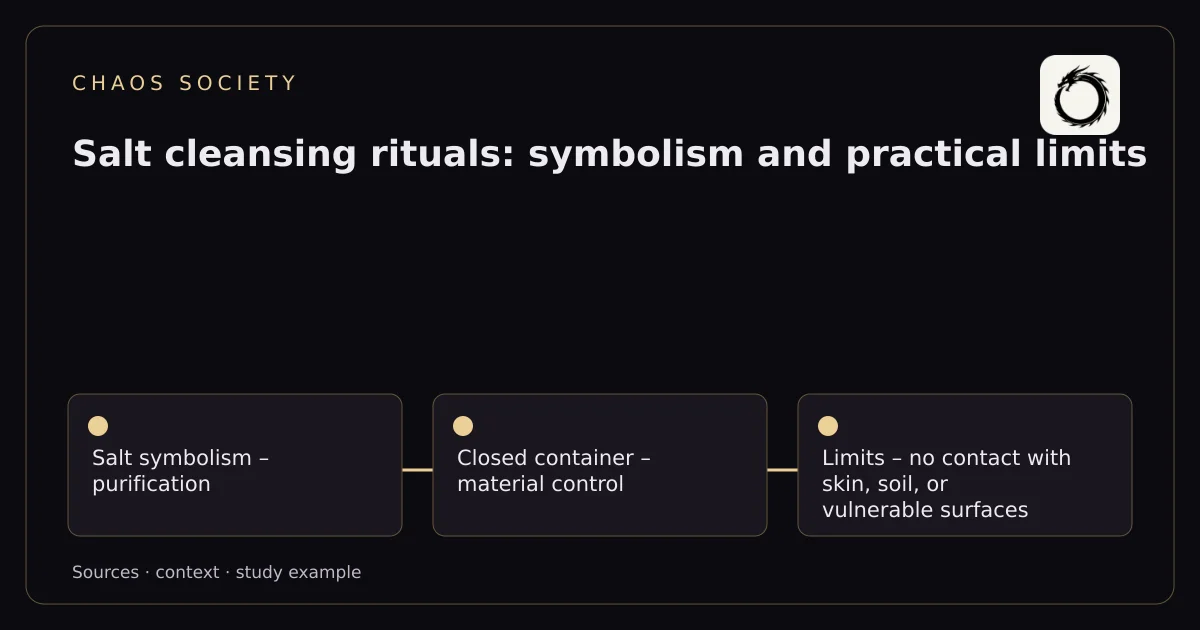
Salt cleansing rituals: symbolism and practical limits
Salt is used in rituals as a symbol of purification, but its action is not measured in absorbed energy. In practices that employ it, it is recommended to keep it in a closed container, avoiding contact with skin, soil, or vulnerable surfaces.
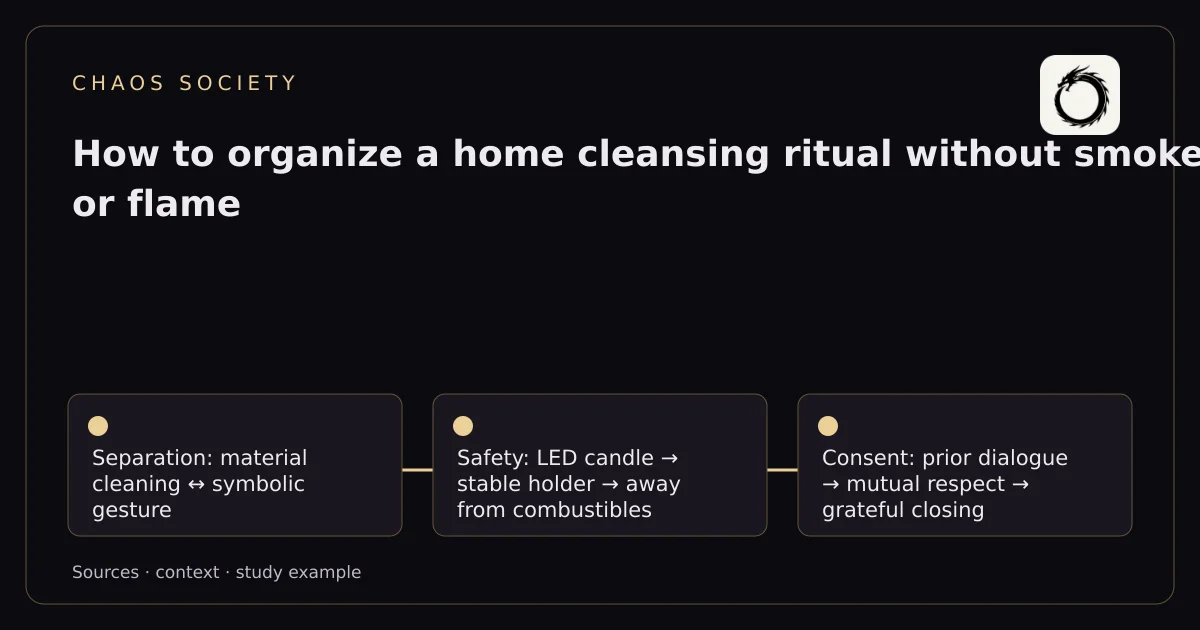
How to organize a home cleansing ritual without smoke or flame
To combine the physical cleaning of the home with a symbolic gesture, choose a space, organize it, set the intention, observe the process, and close it, always with the residents’ consent and without using flames or smoke.

Hermeticism books: Corpus Hermeticum and The Kybalion
The Corpus Hermeticum, translated by G. R. S. Mead, gathers ancient texts of the hermetic tradition; the Kybalion, published in 1908 by the Three Initiates, presents seven modern principles that do not come from the Corpus Hermeticum.
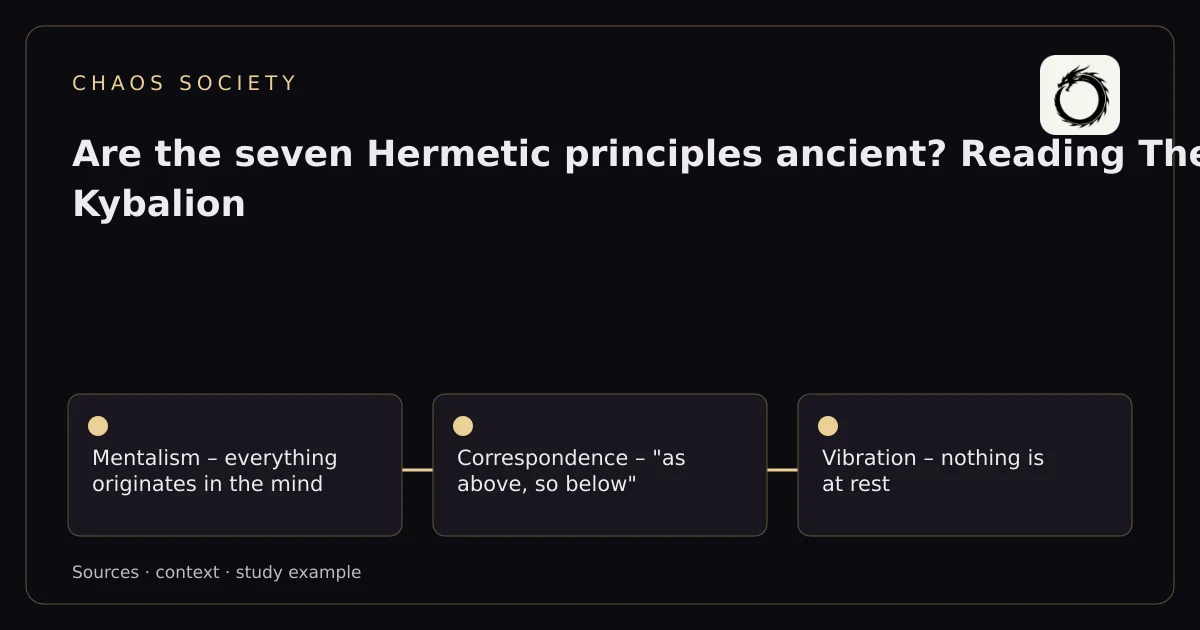
Are the seven Hermetic principles ancient? Reading The Kybalion
The seven principles of the Kybalion – Mentalism, Correspondence, Vibration, Polarity, Rhythm, Cause and Effect, and Gender – were published in 1908; they are not excerpts from the ancient Corpus Hermeticum, but a modern set of philosophical aphorisms.

Hermeticism and Gnosticism: comparing texts and traditions
To compare hermetism and gnosticism, look at the specific text, the worldview it expresses, the type of knowledge it proposes, and how it relates to the divine, remembering that both are plural categories and not single doctrines.
Spiritual alchemy: metaphor, history and reading notes
Spiritual alchemy is an interpretation of alchemical images as a language of inner transformation. It should be identified as an interpretive approach, rather than a universal definition of historical alchemy. Material processes, religious ideas and later psychological readings need their own context.

Solomonic Goetia: traditional attribution and textual history
The Ars Goetia, part of the Lemegeton, is attributed to Solomon only by tradition; there is no historical evidence that the biblical king authored it. The Lemegeton and the Clavicula Salomonis are distinct corpora, each with its own manuscripts, editors, and translations that must be recorded separately.
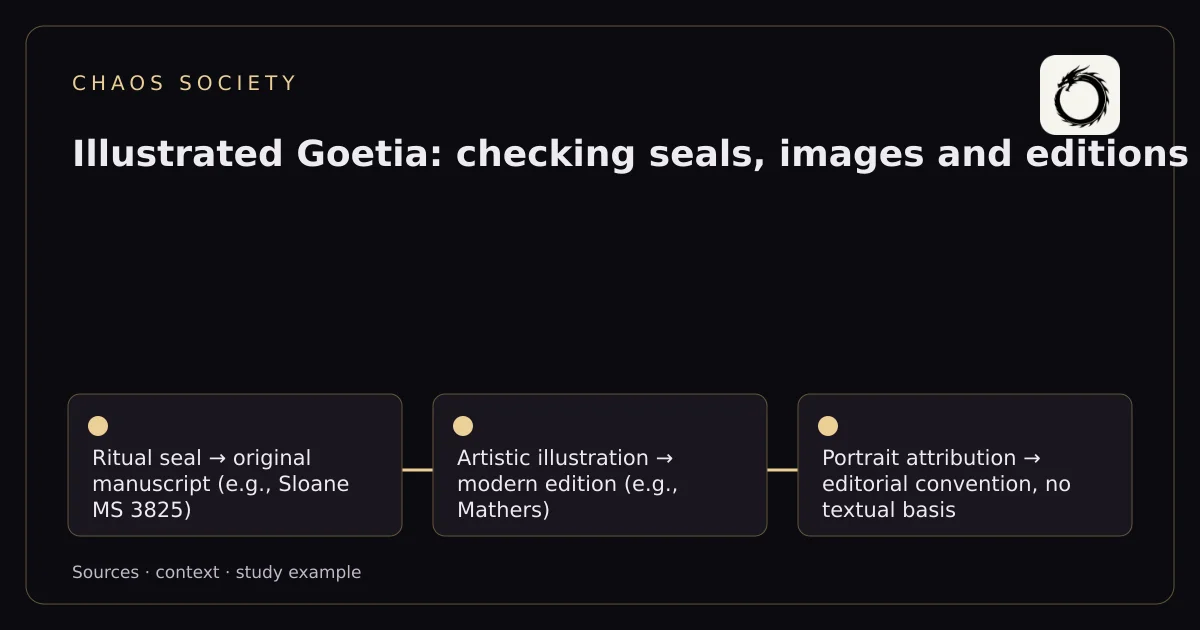
Illustrated Goetia: checking seals, images and editions
To correctly identify a ritual seal, an artistic illustration, or a portrait attributed to a Goetia spirit, check the manuscript’s provenance, compare the style with recognized sources, and confirm the cited edition, without assuming that every drawing belongs to the original text.
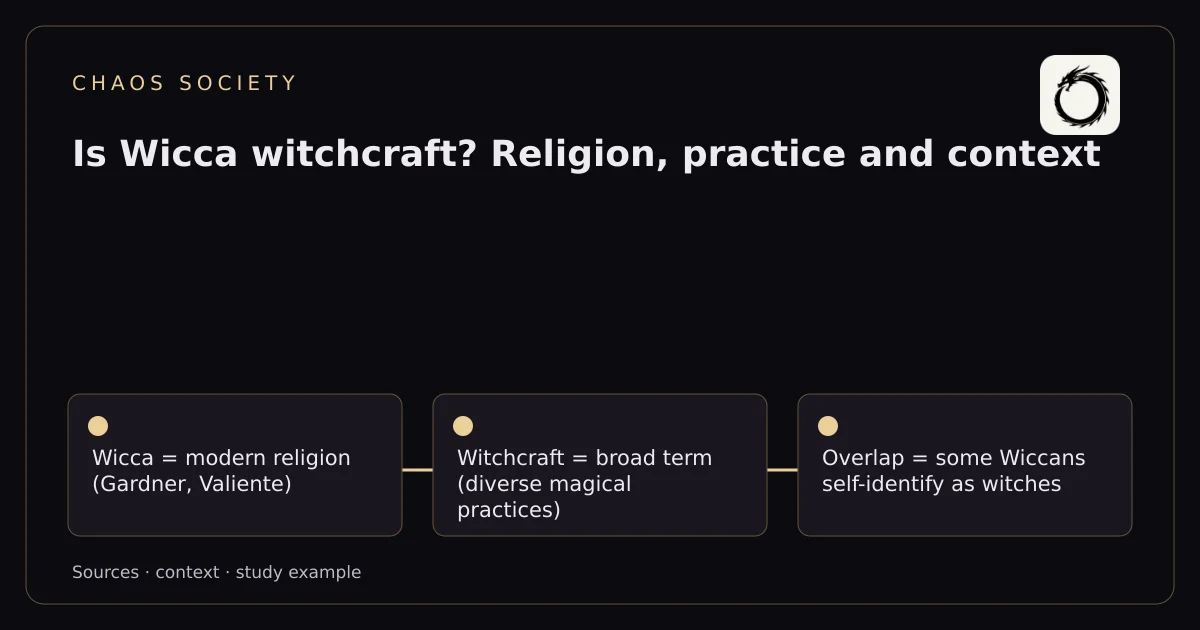
Is Wicca witchcraft? Religion, practice and context
Wicca is a modern religion that emerged from the influences of Gardner and Valiente; witchcraft is a broader term that encompasses diverse practices and beliefs, not all of which are linked to Wicca.
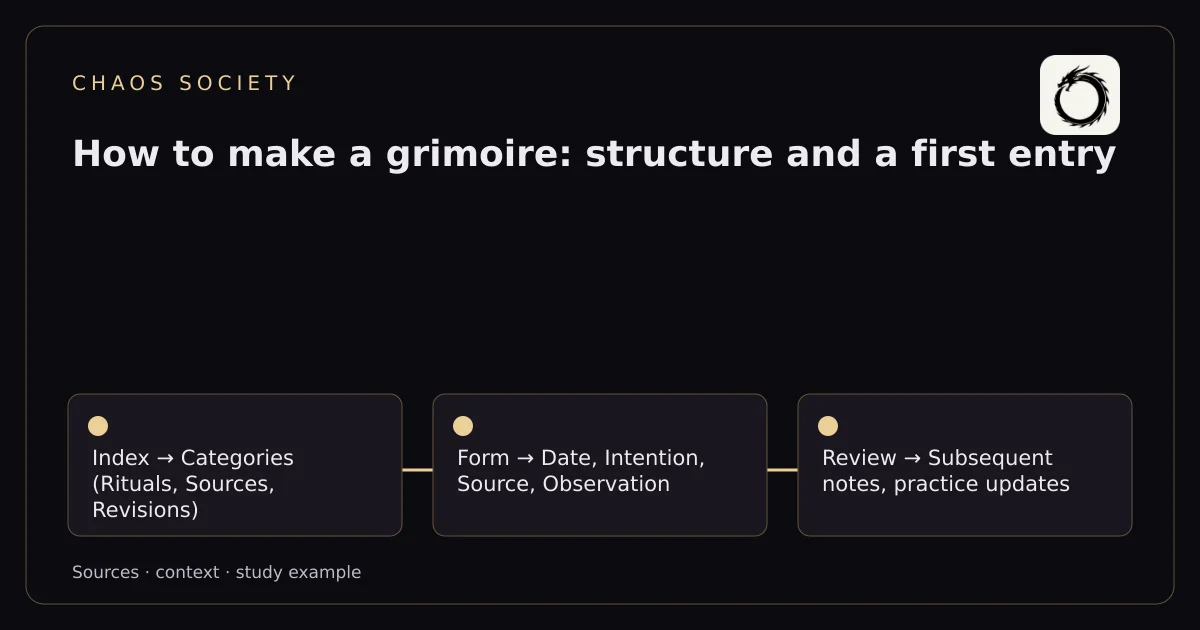
How to make a grimoire: structure and a first entry
A grimoire can be created as a personal notebook, physical or digital, organized by index, sources, correspondences, practices, and revisions; the first entry should contain date, intention, source of information, and observation, without claiming to be a historical manuscript.
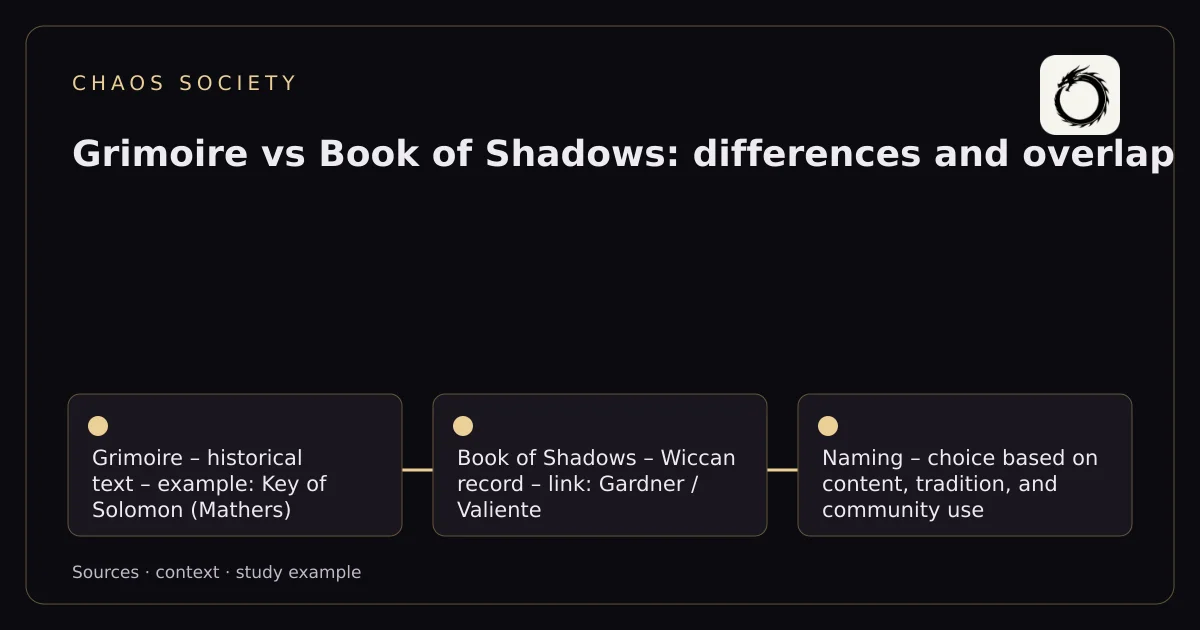
Grimoire vs Book of Shadows: differences and overlap
Grimoire and Book of Shadows are terms that designate collections of magical practices, but they arise in different contexts: the grimoire has historical origins, such as the Key of Solomon edited by S. L. M. Mathers; the Book of Shadows emerges in modern Wicca, linked to Gardner and Doreen Valiente, and can be personal or initiatory.
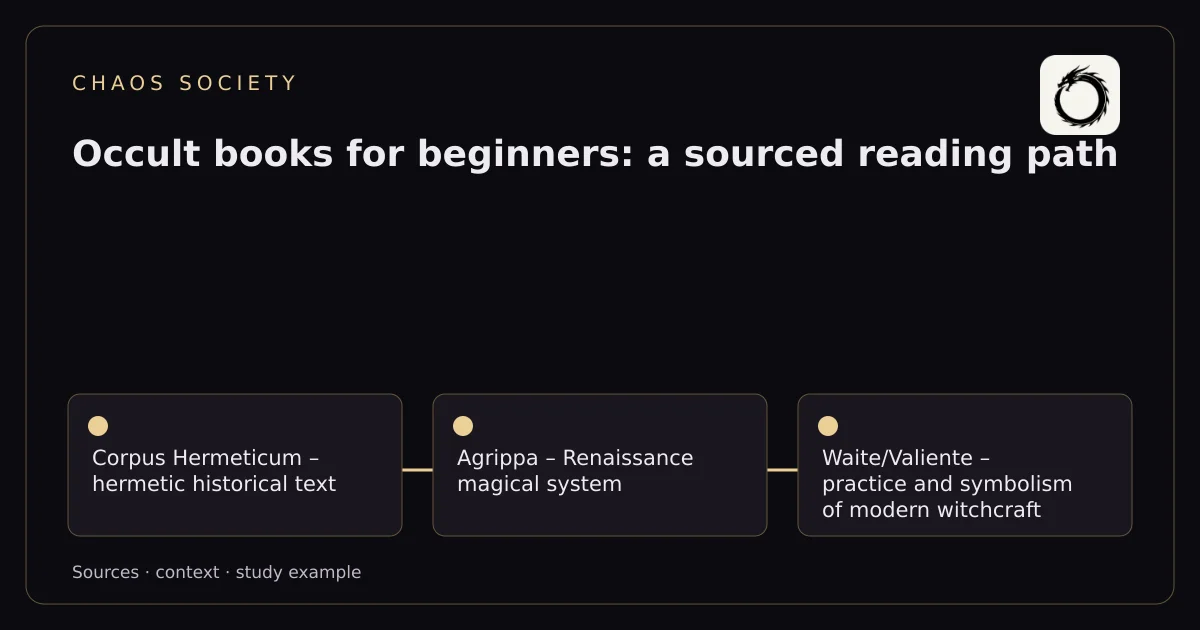
Occult books for beginners: a sourced reading path
For those beginning to study occultism, a useful path includes the Corpus Hermeticum (translation by G. R. S. Mead), the first book of “Three Books of Occult Philosophy” by Agrippa, A. E. Waite’s “Pictorial Key to the Tarot,” and the works of Doreen Valiente, each offering a distinct historical perspective.
How to read old occult books: editions and historical context
To understand an ancient occult text, check the author attribution, identify the original manuscript, and compare it with the modern edition, noting who translated, edited, and what notes were added.
Occult books online: finding texts and checking permissions
To find occult books online, identify the work and edition, choose a traceable source and read the conditions attached to that version. An old original can appear alongside a recent translation, commentary or illustrations with different reproduction conditions.
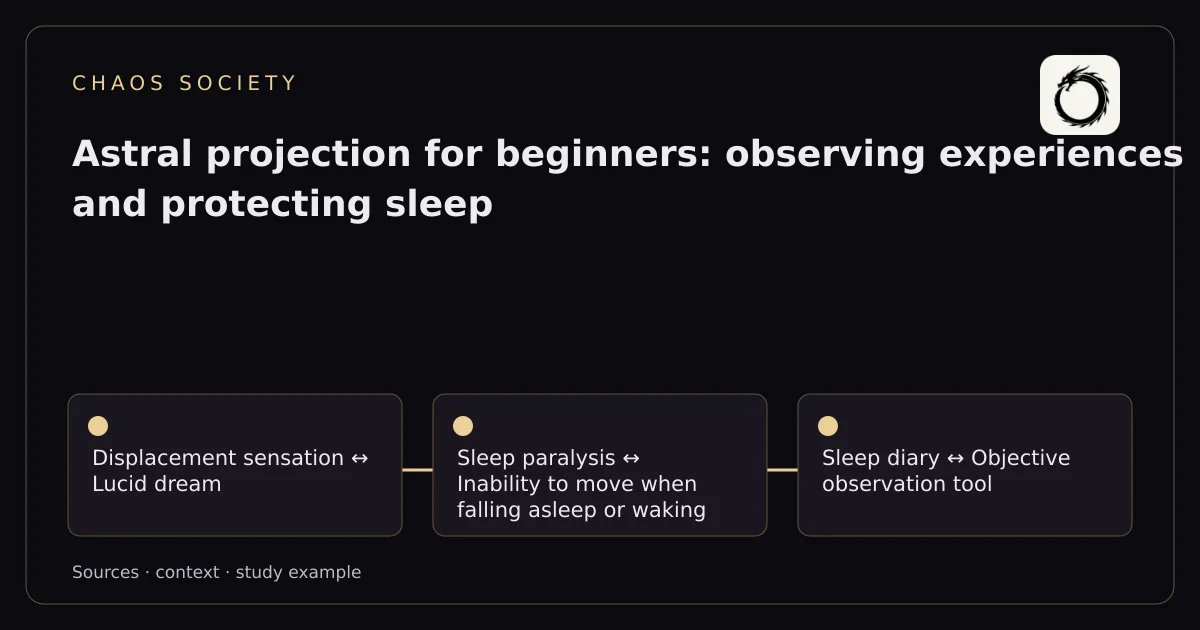
Astral projection for beginners: observing experiences and protecting sleep
Astral projection, understood as a subjective sensation of displacement, does not prove literal exit from the body; when exploring reports, maintain healthy sleep habits, record experiences, and differentiate them from lucid dreams or sleep paralysis.
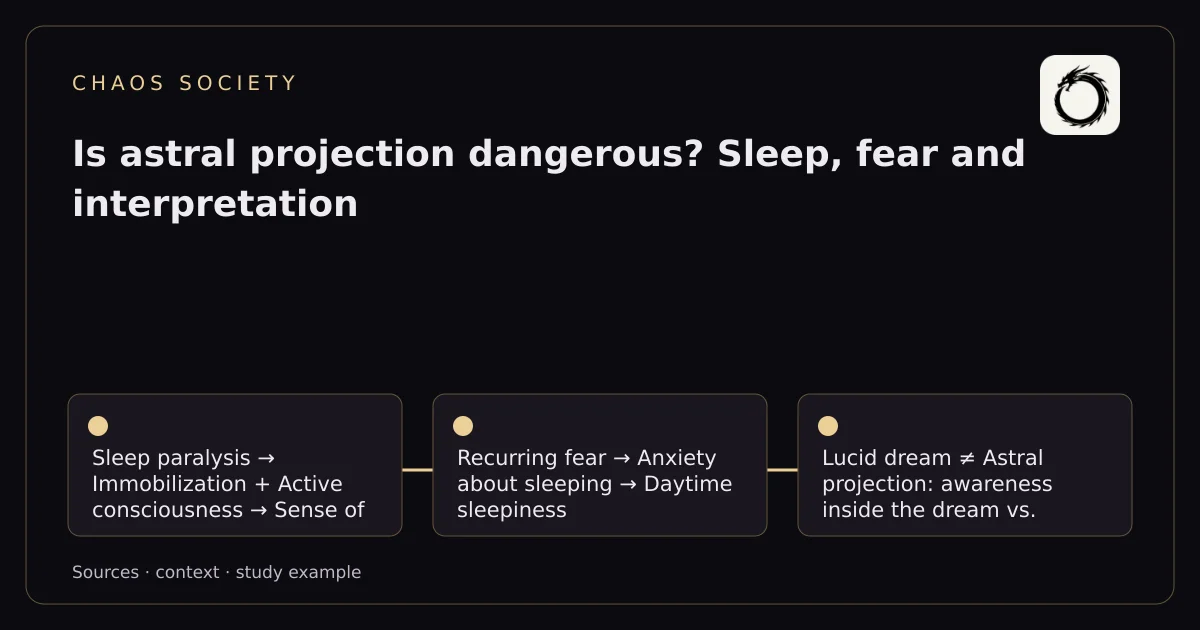
Is astral projection dangerous? Sleep, fear and interpretation
When researching astral projection, distinguish spiritual interpretation, reported sensation and sleep care. Fear and disrupted rest deserve practical attention. The cited sleep sources do not establish dangers involving a supposed spiritual cord, nor do they guarantee that every practice is risk-free.

Is astral projection real? Experience and verifiable evidence
Astral projection reports can be intense and meaningful. Assess a claim by separating experience, interpretation and independent verification. The cited sleep sources do not demonstrate literal movement of consciousness or justify assuming every report is identical.
How to approach lucid dreaming: journals, intention and research
For a modest introduction to lucid dreaming, keep an ordinary sleep schedule and a dated dream journal. This record can help you examine recall and recognise recurring features. It is a study adaptation, not a promise of lucidity or a reproduction of a validated induction protocol.
Are lucid dreams real? Dream awareness and research limits
Lucid dreaming is investigated as awareness of dreaming while a dream continues. To assess a study, distinguish its definition, method and results. A report about lucidity is not automatically a laboratory measurement, and awareness does not imply unrestricted control of a dream.

How to choose lucid dreaming books and check their claims
A lucid-dreaming reading list is more useful when it separates practical manuals, research articles and sleep-health information. Choose a source for the question it can answer, and inspect a book’s actual contents and edition rather than relying on promises of guaranteed dream control.
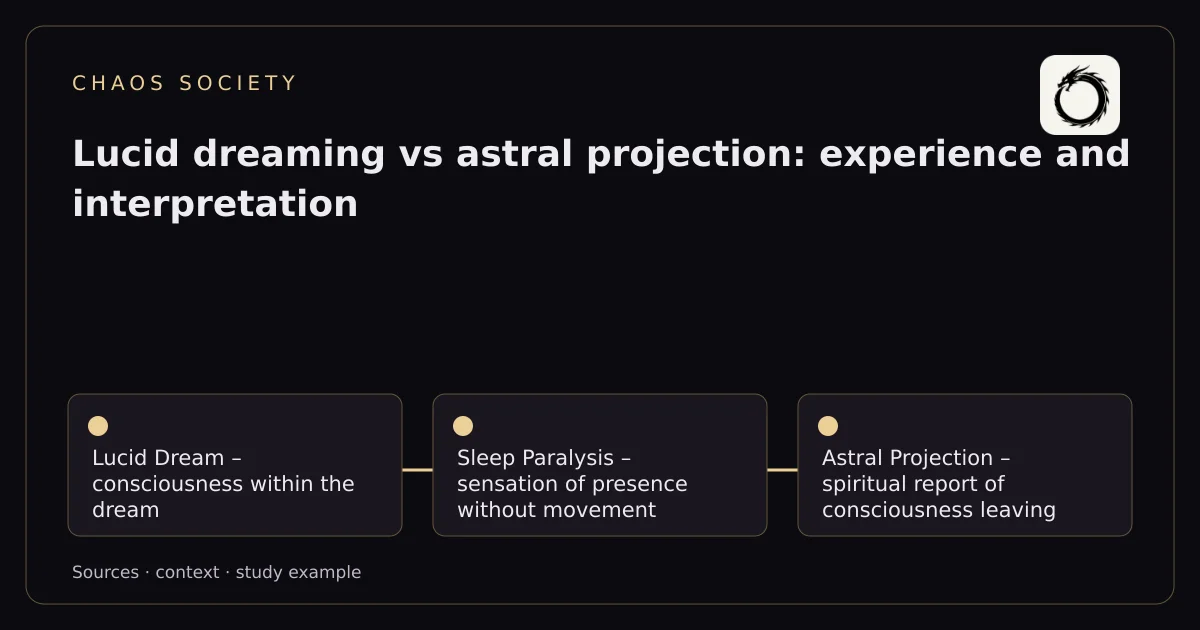
Lucid dreaming vs astral projection: experience and interpretation
Lucid dreaming is the awareness of being in a dream while the dream is occurring; astral projection refers to the sensation of leaving the body. Reports may overlap, but that does not prove they are the same experience or that there is external travel.

Does a candle flame have spiritual meaning? Symbolism and physical factors
The flame of a candle can be observed under two prisms: the physical, which depends on airflow, wick type and fuel, and the symbolic, which each person interprets according to personal beliefs, without the height or color of the flame indicating entities or future events.

Candle magic for beginners: color, intention and a flameless option
To begin practicing candle magic, choose the color that represents your intention, follow the U.S. Fire Administration’s safety guidelines, and if you prefer, replace the candle with an LED or colored card, recording the outcome.
Brazilian magical herbs: common names, origin and identification
In Brazil, plants used in magical practices can be native, introduced, or adopted from other cultures; recognizing the correct origin and identification avoids confusion, such as that which occurs with rosemary, a Mediterranean species cultivated here but not native.
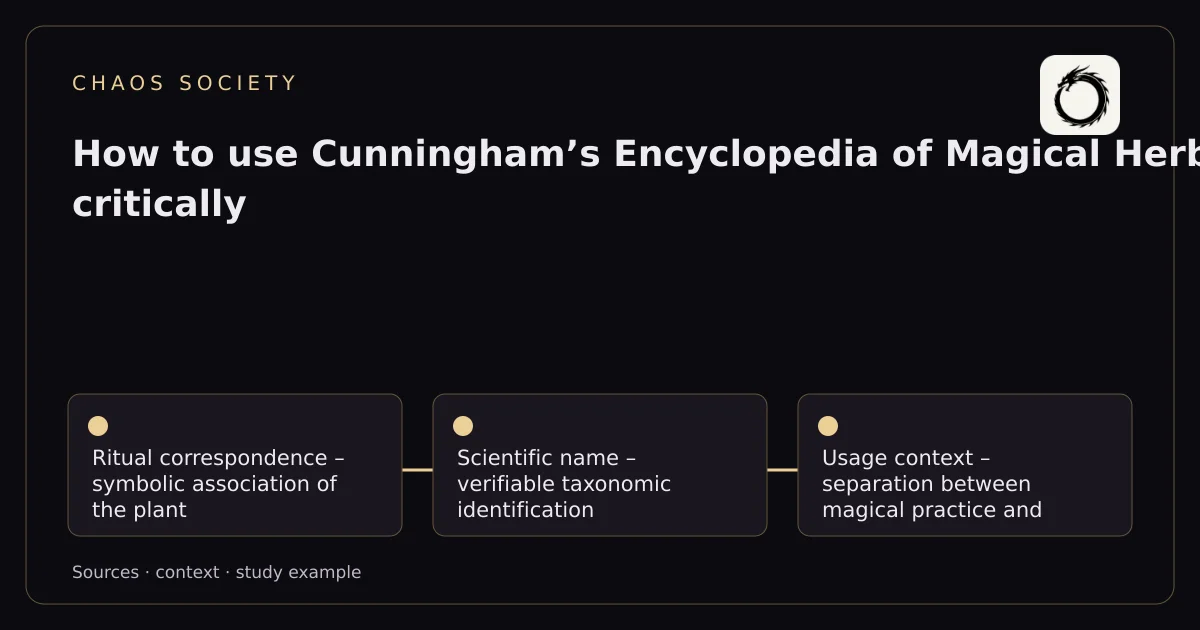
How to use Cunningham’s Encyclopedia of Magical Herbs critically
To use Scott Cunningham’s Encyclopedia of Magical Herbs safely, confirm the plant’s scientific name, recognize that the book offers ritual correspondences and does not indicate clinical uses, and compare the information with recognized botanical sources.
Protective herbs: studying symbolism without promising effects
An herb described as protective carries an association in a particular symbolic system. That label is not a botanical property or evidence that the plant prevents harm. Compare an identified plant, an identified author and a clearly stated use before building your own correspondence notes.

St. John’s wort and ritual: names, traditions and identification
NCCIH discusses Hypericum perforatum under the name St. John’s wort. Common names can vary regionally. Study a ritual association through an identified source and species, without turning symbolism into a medicinal recipe or relying on a short visual description.
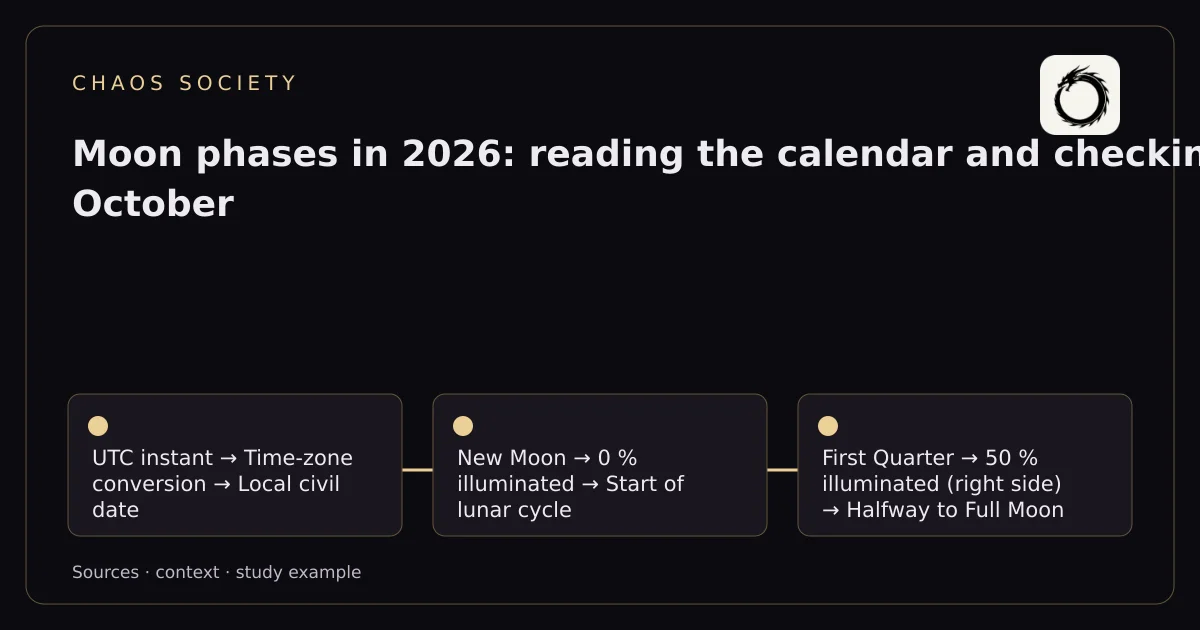
Moon phases in 2026: reading the calendar and checking October
To use the 2026 lunar calendar, note that the four main phases are exact moments of illumination; the civil day on which they appear depends on the adopted time zone. Thus, correct reading combines the astronomical instant with the local date.
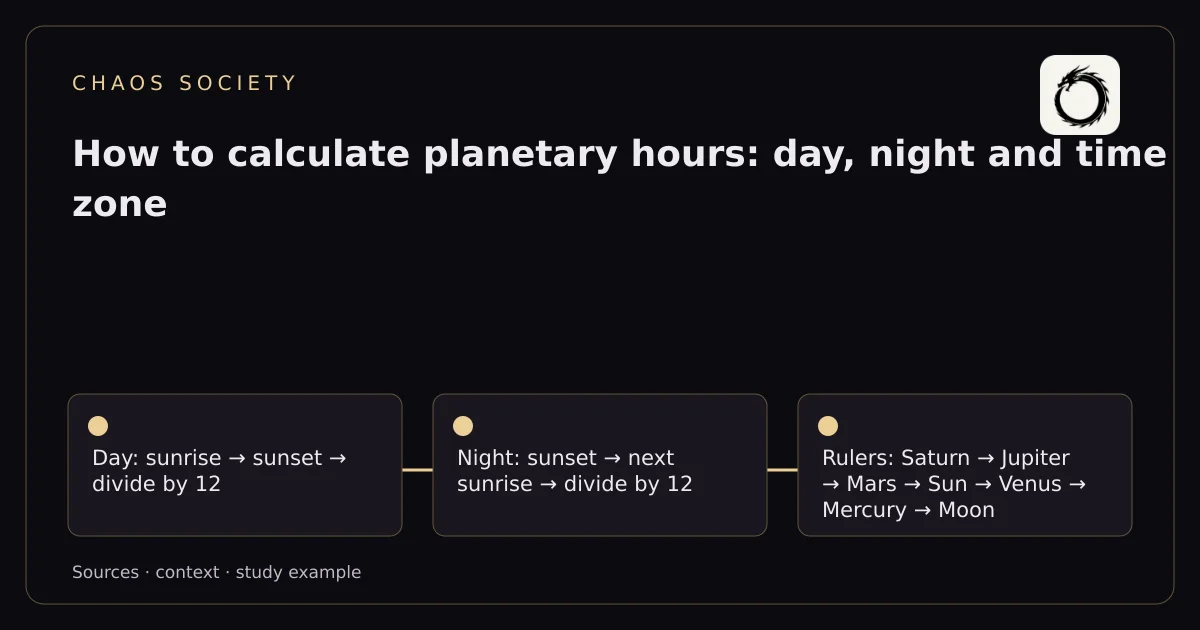
How to calculate planetary hours: day, night and time zone
Planetary hours divide the period between sunrise and sunset into 12 equal parts and the interval between sunset and the next sunrise into another 12, assigning each segment one of the seven planets in a fixed order; the calculation depends on latitude and time zone.
Inverted pentagram: history, interpretation and context
An inverted pentagram is a five-pointed star shown with a different orientation. Its meaning depends on the document, community and setting in which it appears. Geometry alone cannot identify someone’s religion or establish a universal connection with evil.
Algiz: runic writing, its name and modern protection meanings
Algiz belongs to the 24-sign Elder Futhark. To study its modern protective interpretations, distinguish the written sign, names reconstructed or transmitted through different runic traditions, and a contemporary author’s correspondence. None of these alone demonstrates a protective effect.
Hecate’s symbols: ancient sources and contemporary designs
To study Hecate’s symbols, separate an ancient passage, a later image and a present-day devotional interpretation. They can be related without coming from the same period. A symbol’s absence from one source does not prove that it was invented recently.
Luciferianism vs Satanism: currents and sources
Luciferianism and Satanism are traditions that distinguish themselves by how they define themselves, by their theistic or non-theistic stance, by the symbols they adopt, and by the ethical principles that guide their practices.
Philosophical Luciferianism: values, symbols and self-definition
Philosophical luciferianism is not a single doctrine; it gathers individual readings of symbols and values that may or may not include religious dimensions, varying according to the primary source consulted and each reader’s interpretation.

Luciferianism books: separating literary myth and contemporary doctrine
To distinguish the literary myth of Lucifer from contemporary doctrine, analyze the original context of the texts, verify the author’s intent, and compare the theoretical structure presented with the self-definitions of current groups.

Jewish Kabbalah and Hermetic Qabalah: texts and context
Jewish Kabbalah is based on texts such as the Sefer Yetzirah, while Hermetic Qabalah is a Western reception that uses distinct planetary tables and does not represent the entire Jewish tradition.

Book of Shadows template: sources, practice and review pages
A personal Book of Shadows template can organise sources, chosen practices and observations without claiming to reproduce an initiatory text. Decide its purpose first. A reading notebook, a devotional record and a lineage document do not automatically share the same authority or audience.

Gerald Gardner and the Book of Shadows: text and lineage
A Gardnerian Book of Shadows is not authenticated by its title or by mentioning Gardner and Valiente. Study provenance, the people responsible for a version and its recognised transmission context. A publicly available personal notebook can be useful without being an initiatory lineage document.
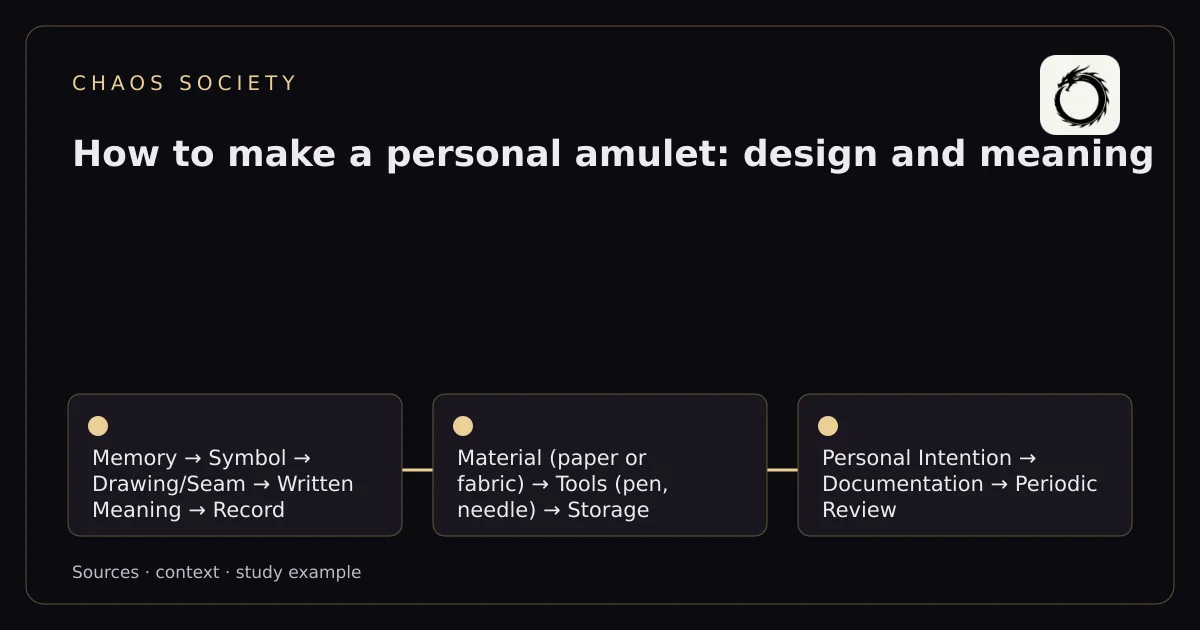
How to make a personal amulet: design and meaning
A personal amulet begins with choosing a symbol linked to a memory, is drawn or embroidered on paper or fabric, is given a defined meaning, and finally is recorded to reinforce the intention without resorting to risky practices.

A simple banishing practice: symbolic closure and historical context
A simple symbolic closing can mark the end of a reading or personal practice: put materials away, breathe normally and note what has ended. This editorial example differs from the Lesser Pentagram Ritual and does not demonstrate the removal of entities.
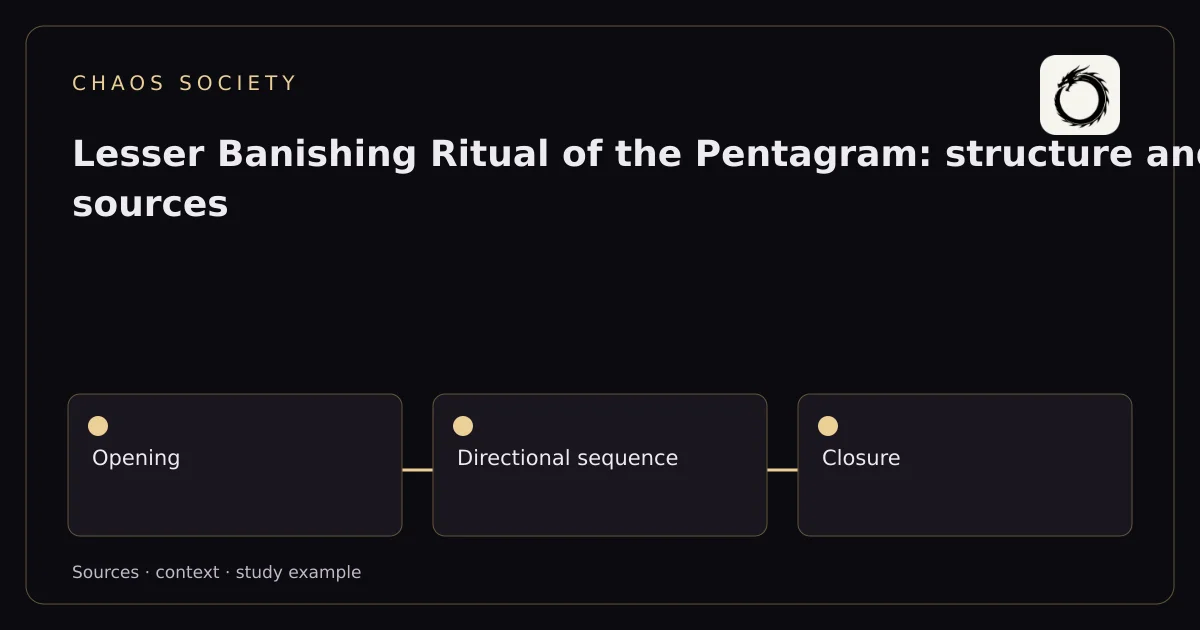
Lesser Banishing Ritual of the Pentagram: structure and sources
The Lesser Pentagram Ritual can be studied in Liber O through its sequence: Qabalistic Cross, directional figures and names, archangel invocation and closing cross. This outline helps locate the parts; it does not replace the diagrams and instructions of the edition being read.

Pentagram and hexagram banishing rituals: what differs?
Pentagrams and hexagrams are different figures used in distinct ceremonial practices. In Liber O, read their procedures separately. The number of points does not establish a hierarchy of power, and exchanging one shape for the other does not automatically retain a ritual’s meaning.

Rosemary magical correspondences: botany, sources and attribution
Rosemary (Salvia rosmarinus, synonym Rosmarinus officinalis) is a Mediterranean plant whose magical correspondences vary among authors; analyzing the sources and comparing personal readings helps understand these differences without prescribing use.

Ceremonial magic books: building a study bibliography
To build a bibliography for ceremonial magic, include works that represent different traditions: Agrippa for hidden philosophy, the Key of Solomon as a sealing ritual text, Ars Goetia for cataloguing spirits, and Liber O for pentagram and hexagram practices.
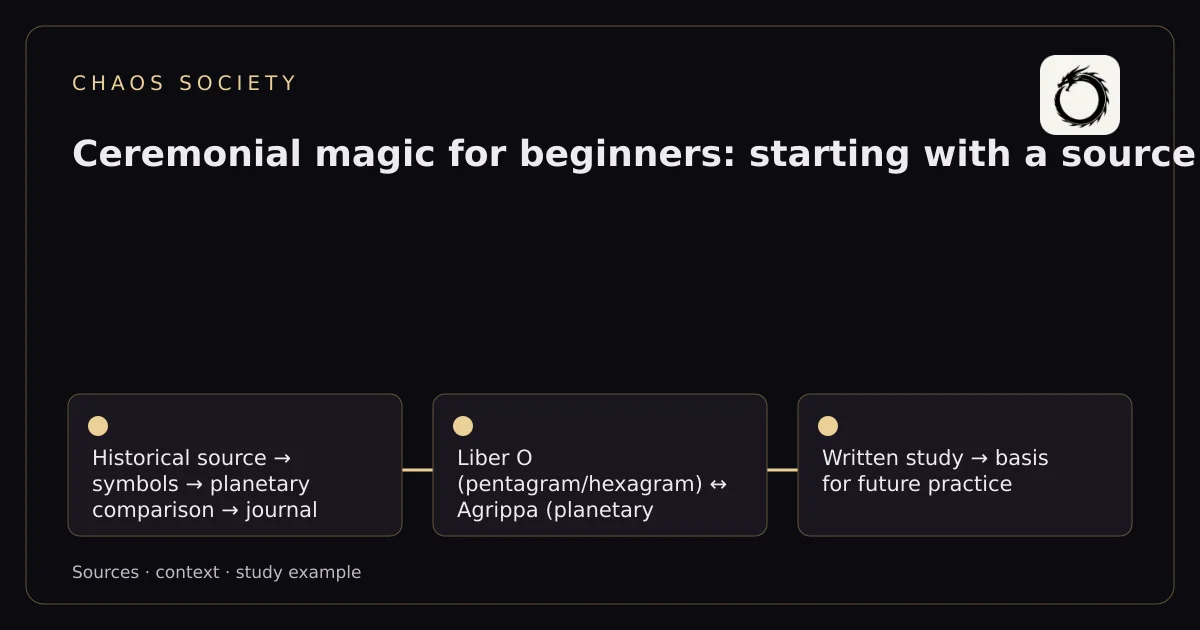
Ceremonial magic for beginners: starting with a source
For those beginning in ceremonial magic, the first effective step is to examine a historical source in detail, such as Aleister Crowley's Liber O or Chapter 22 of Agrippa's Occult Philosophy, before setting up any ritual or using instruments.
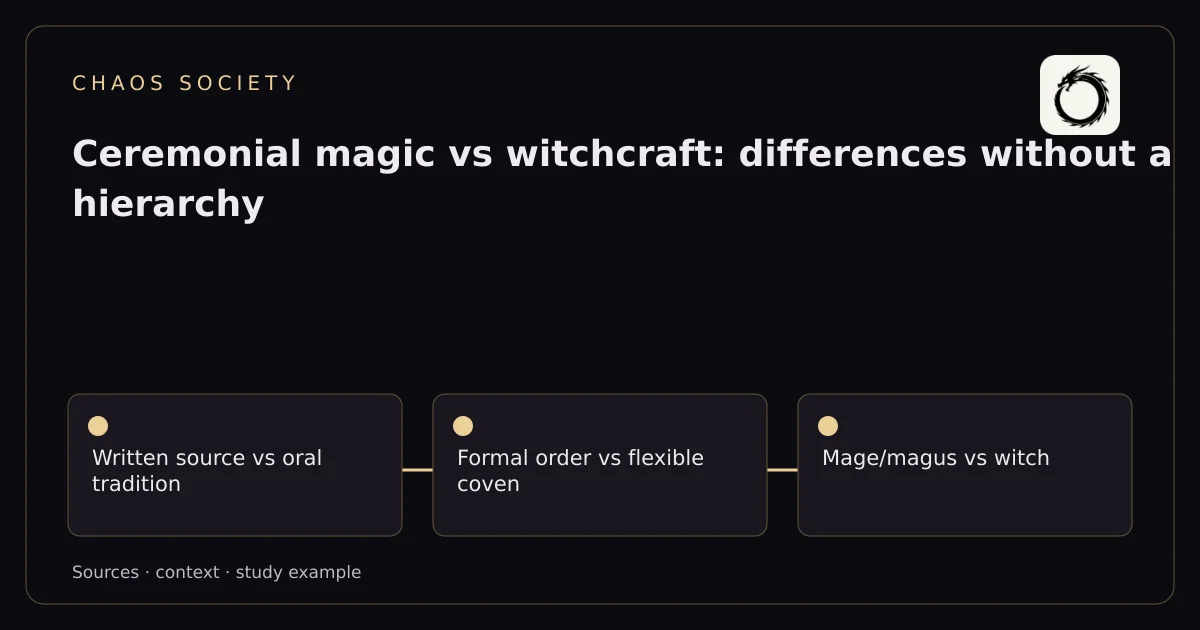
Ceremonial magic vs witchcraft: differences without a hierarchy
Ceremonial magic and witchcraft are distinct practices that differ in written sources, organizational forms, and self-definition, yet coexist in overlapping areas without one being considered superior to the other.

Solomonic magic: distinguishing the Key, Goetia and modern reception
Solomonic magic includes textual traditions attributed to Solomon and their later reception. The Key of Solomon and Ars Goetia are distinct works. A useful study programme identifies the text, manuscripts, edition and subsequent commentary before comparing a practice.
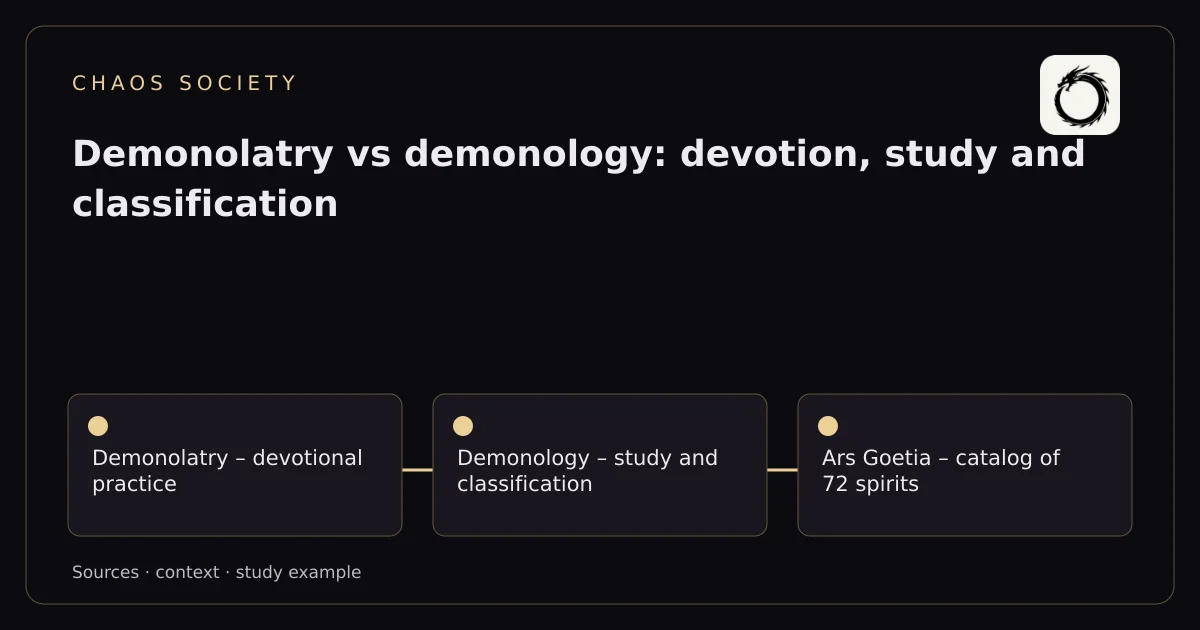
Demonolatry vs demonology: devotion, study and classification
Demonolatry refers to the devotional practice toward demons in certain esoteric currents; demonology is the study and classification of these beings, such as the 72-spirit catalog of the Ars Goetia, without implying worship.

Demonolatry and Goetia: why the terms are not interchangeable
Demonolatry names devotional approaches described by some contemporary practitioners. Ars Goetia is a specific text within the Lemegeton. Comparing them requires separating a practitioner’s self-description, a historical ritual text and later adaptations that may combine elements of both.

Demonolatry books: checking authorship, currents and references
Choose a demonolatry book by identifying its author, stated current and purpose. A devotional manual, a personal interpretation and a historical text answer different questions. S. Connolly’s The Complete Book of Demonolatry is an identifiable practitioner reference, not an automatic representation of every practitioner.