Natural witchcraft for beginners: an observation notebook
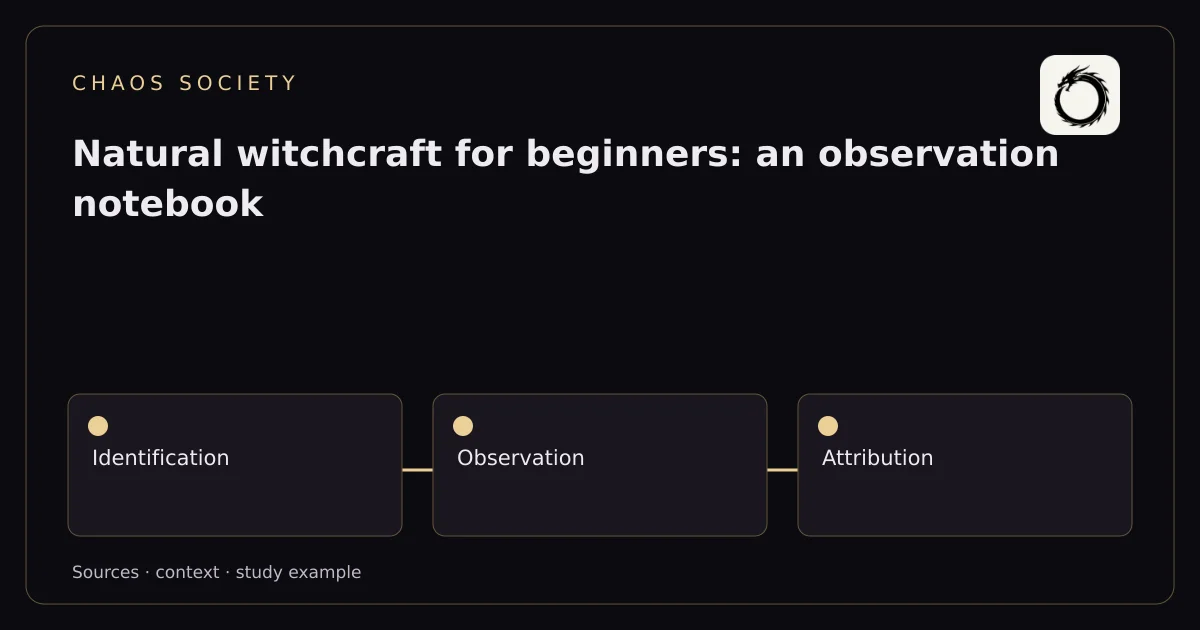
An observation notebook can support the study of natural witchcraft without collecting plants or treating symbolic correspondences as physical measurements. Record what you can observe, identify the plant through a reliable reference, and keep cultural attribution separate from your own interpretation of the setting.
Identify what you are studying
A common plant name may refer to different species. Kew records Salvia rosmarinus as an accepted name for rosemary, with Rosmarinus officinalis as a synonym. A name in a magical compendium should be checked against botanical identification rather than transferred to another plant by resemblance.
Record the setting
Note date, place, light and visible conditions. Photographs and descriptions can be compared later without collecting a specimen. If you add a seasonal or symbolic association, identify its source in a separate field. The description of a feeling is not a measurement of a plant’s physical energy.
Use references critically
Cunningham’s Encyclopedia of Magical Herbs is a modern reference for magical attributions. It is not a universal account of all communities, a Brazilian flora or a clinical manual. An original notebook exercise should not be presented as an ancestral initiation or as evidence that a plant causes a promised effect.
An observation record
- Source and scientific identification of the plant.
- Location, date and observable conditions.
- Photograph or sketch without collecting protected material.
- Symbolic attribution, its source and your separate interpretation.
Frequently asked questions
Do I need to collect plants?
No. A photograph, drawing or observation can support the exercise without collection.
Does a correspondence establish an effect?
No. A cultural attribution and a demonstrated physical effect are different claims.
Can I use a common name alone?
Not for reliable identification; check the species and the reference consulted.