Protection sigils: personal boundaries and symbol design
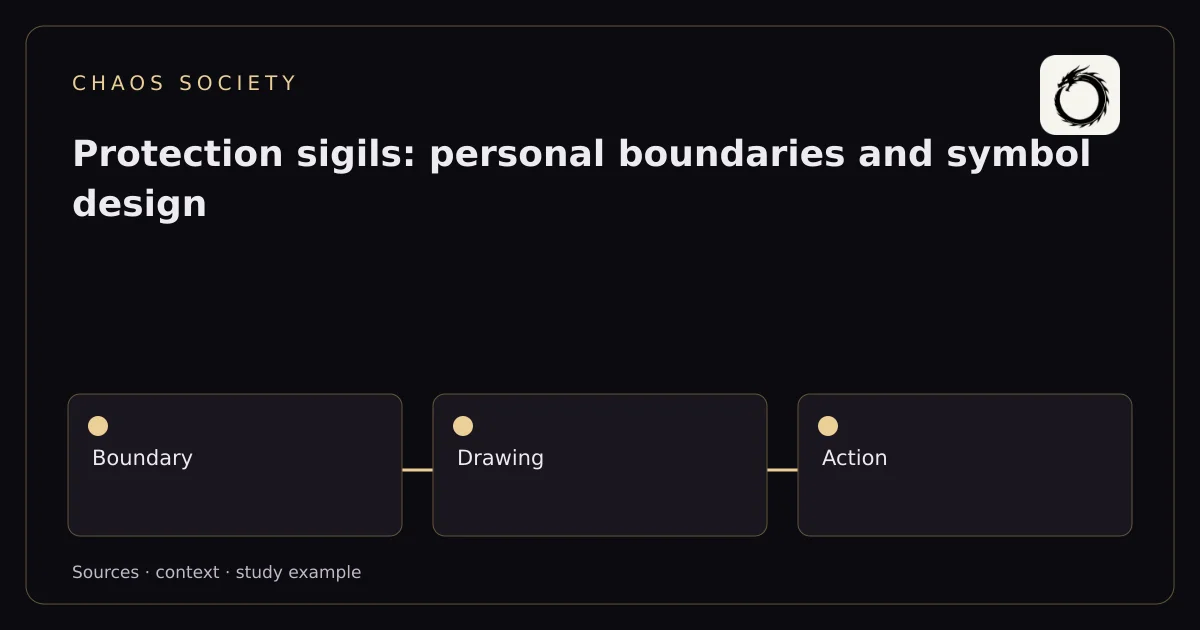
A protection sigil can represent a personal boundary through a drawing and a written intention. Its meaning belongs to the maker’s symbolic practice. The design does not establish an invisible barrier, store measurable energy or replace physical safety, digital privacy or appropriate support when a threat is real.
Choose a boundary you can act on
Describe your own intended action, such as respecting a rest period or deciding when to answer messages. Avoid framing the exercise as control over someone else. A clear sentence gives the drawing a specific context and makes later reflection more useful than a vague promise of absolute protection.
Create and identify the design
Select a drawing method, record its rule and keep the original sentence. You may combine letters or use the public generator. This produces a graphic representation; it does not demonstrate a quantity of energy inside the file. Distinguish your personal design from a seal copied from an identified historical source.
Connect the symbol with a practical step
Use the drawing as a reminder of one action within your control. Record what you did and what remained difficult. If the issue involves actual danger, the symbol cannot resolve it by itself. Keep concrete care and relevant support separate from claims about symbolic effectiveness.
A personal record
- Intention: respect my rest period.
- Design: a simple graphic with its construction rule.
- Action: decide when to stop checking messages.
- Review: what happened and what needs adjustment?
Frequently asked questions
Is there one universal protection design?
No. Meanings vary between makers, authors and traditions.
Is this a historical spirit seal?
A personal drawing is different from a seal documented in a particular grimoire.
Does it guarantee safety?
No. A symbolic practice cannot replace concrete responses to actual risks.