How to read old occult books: editions and historical context
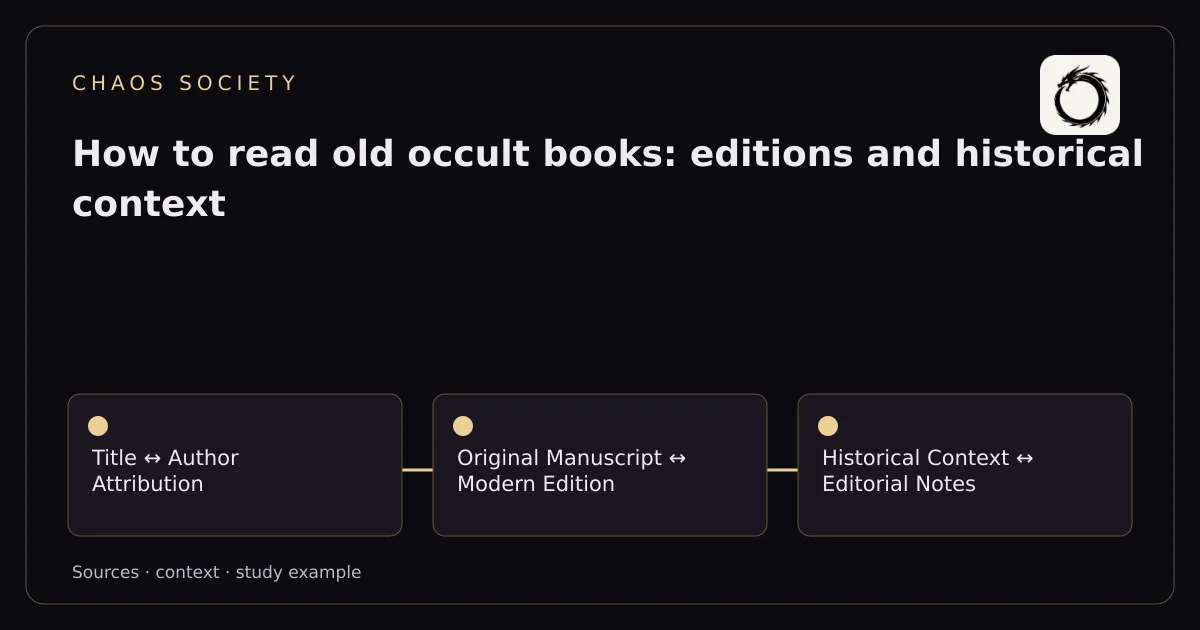
To understand an ancient occult text, check the author attribution, identify the original manuscript, and compare it with the modern edition, noting who translated, edited, and what notes were added.
Distinction Between Title, Attribution, and Manuscript
An old book may have a title that does not reflect the real authorship; the attribution indicates who the text has traditionally been linked to, while the original manuscript contains the content that was copied over the centuries.
In the case of the Key of Solomon edited by S. L. MacGregor Mathers, the title, the attribution to Solomon, and the medieval manuscript are three distinct elements that must be recognized separately.
The Role of the Modern Edition and the Translator
Contemporary editions present editorial choices: selection of variants, inclusion of explanatory notes, and often a translation that may reflect the translator’s interpretation.
The 1651 translation of Three Books of Occult Philosophy by Agrippa, for example, brings the original Latin text into English, but the interpretations and comments inserted belong to the translator and the context of the 17th century.
Contextualizing the Content for Modern Reading
When reading an occult treatise, consider that the statements are not demonstrations of natural effects; they are part of the author’s belief system. This separation prevents automatic reading as practical instruction.
Also note the editorial notes: they may clarify archaic terms, point out differences between manuscripts, and indicate how the text was adapted for the audience at the time of the edition.
Steps to Analyze an Ancient Occult Book
- Verify the title and record the traditional attribution to the author.
- Identify the manuscript or primary source cited in the edition.
- Consult the modern edition: who edited, who translated, and what notes were included.
- Compare passages from the manuscript (if available) with the edited version to notice changes.
- Evaluate the historical context of the author and the edition to understand the text’s intent.
Frequently asked questions
Does Mathers’ edition of the Key of Solomon alter the original content?
Mathers’ edition presents the text based on known manuscripts but includes his own organization, commentary, and variant choices, which may differ from the original manuscript.
Is the 1651 translation of Agrippa faithful to the original Latin?
The translation reflects Agrippa’s Latin but incorporates the translator’s interpretation and style of the 17th century, which may introduce nuances different from the original text.
Should I follow the instructions found in these books as safe practices?
No. The instructions are part of historical belief systems and do not constitute proven or safe recommendations for contemporary use.