Luciferianism vs Satanism: currents and sources
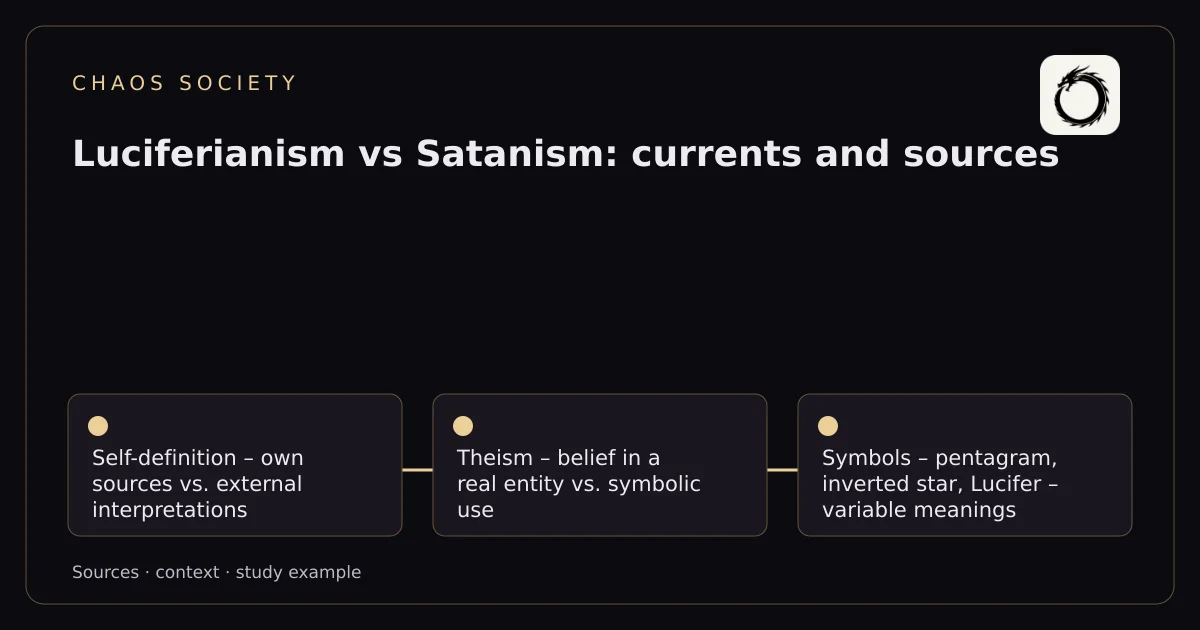
Luciferianism and Satanism are traditions that distinguish themselves by how they define themselves, by their theistic or non-theistic stance, by the symbols they adopt, and by the ethical principles that guide their practices.
Self-definition and Reference Sources
Practitioners of each current usually use their own resources to describe their beliefs; for example, sites such as Demonolatry.org present accounts from adherents who consider themselves demonolatryists, but these accounts do not constitute academic consensus. Thus, self-definition varies among groups that identify as luciferian, satanist, or demonolatryist.
It is important to note that religious texts such as the Book of Isaiah, in the New Vulgate, are cited by some luciferianists as a symbolic source, yet the original context does not establish a single doctrine for these contemporary currents.
Theism versus Non-theism
Some luciferian branches adopt a theistic stance, seeing Lucifer as a real entity or divine archetype, while others treat him only as a symbol of enlightenment and rebellion. In Satanism, there is likewise a division: the theistic Satanism recognizes Satan as a concrete being, whereas non-theistic Satanism (for example, the Anton LaVey line) understands him as a psychological metaphor.
These differences influence ritual practice: invoking real entities requires a set of beliefs distinct from simply using symbolic images.
Symbols and Ethics
Compare symbols and ethics declared by an identified organisation or author. No rule established here defines every Satanism through pleasure or every Luciferianism through one enlightenment programme. A symbol alone does not establish identity, and the cited sources do not replace a particular community’s manifesto.
How to Compare Two Currents in Practical Field
- Check the self-definition in the practitioners’ own texts or websites (e.g., Demonolatry.org).
- Identify whether the current declares itself theistic or non-theistic regarding the central entity.
- Analyze the predominant symbols and their meanings declared by the groups.
- Examine the ethical statements or codes of conduct published by the adherents.
- Contrast the cited sources (for example, use of biblical texts such as Isaiah) with the proposed symbolic interpretation.
Frequently asked questions
Do all luciferian currents consider Lucifer a real entity?
No. Some treat him as a symbolic archetype, while others venerate him as a concrete being.
Does Satanism always imply the worship of Satan?
No. Theistic Satanism includes worship, but non-theistic Satanism uses Satan as a symbol of rebellion or individualism.
Are the symbols used by luciferianists and Satanists the same?
Some symbols overlap, but each current assigns different meanings to them.