The Gnostics and the Demiurge: Yaldabaoth, the archons and the divine spark

Chaos Society
Acervo de estudo · magia, ocultismo e esoterismo
The god who got it wrong
The most famous idea of Gnosticism is also the most unsettling: the god who made this world is not the true God. He is a lesser being, the Demiurge, who made the material world out of ignorance or arrogance and imprisoned within it sparks of light that come from above. Salvation, for the Gnostics, is gnosis, direct knowledge of one's divine origin, which sets that spark free.
The scholar Karen King points out that "Gnosticism" is a modern category. The ancient groups were diverse and not all of them held this view. But the Demiurge is the theme that unites them in today's imagination.
From Plato to the Gnostics
The word dēmiourgos means "craftsman". In the Timaeus, Plato describes a divine craftsman who contemplates the eternal forms and orders matter in their image. He is a good being: he makes the best world possible with the material available.
The Gnostics kept the figure and reversed the verdict. If the world is full of suffering and death, whoever made it cannot be the supreme God.
Yaldabaoth in the Apocryphon of John
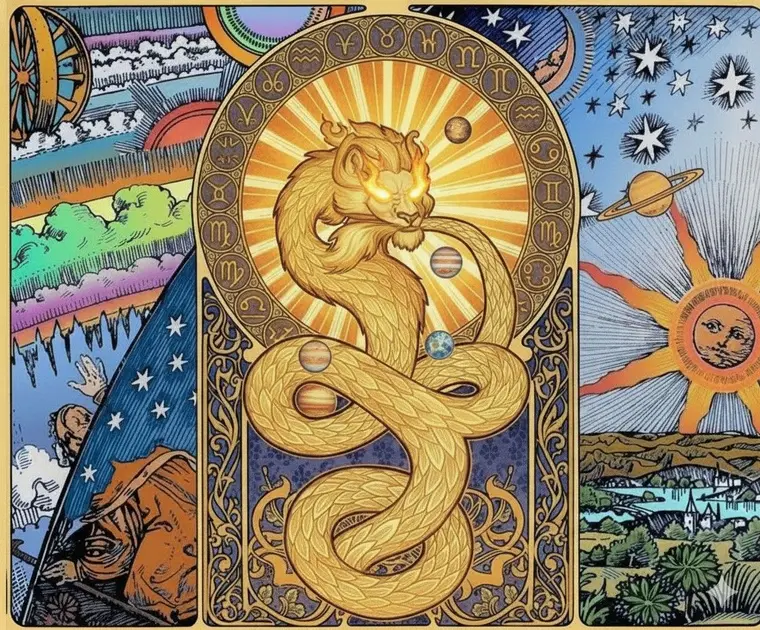
The fullest text is the Apocryphon of John, known from four copies, three of them from Nag Hammadi. It tells how Sophia, Wisdom, one of the aeons of the divine world, wished to bring forth on her own, without her partner's consent. From this came a misshapen being, a lion-headed serpent with eyes of fire, which she hid in a cloud and named Yaldabaoth.
Yaldabaoth stole part of his mother's power, created the archons, rulers of the heavenly spheres, and made the world. Then he declared: "I am a jealous God and there is no other God beside me", the words of Exodus and Isaiah placed in the mouth of a god who does not know what exists above him. To create the human being, the archons moulded Adam, but Adam only came alive when Yaldabaoth breathed into him the power stolen from Sophia. The divine spark passed into humanity, and the archons began trying to hold on to it.
The Hypostasis of the Archons, another Nag Hammadi text, also calls the Demiurge Samael, "god of the blind", and Saklas, "the fool".
Sethians and Valentinians
- Sethians: the authors of the Apocryphon of John and related texts. The Demiurge is arrogant and hostile, and the archons are jailers.
- Valentinians: followers of Valentinus, a 2nd-century Christian teacher in Rome. For them the Demiurge is more ignorant than evil, a kind of servant who does not understand his role, and he may even be redeemed in the end.
Marcion, a contemporary of Valentinus, distinguished the just god of the Old Testament from the good God revealed by Jesus. He is not strictly a Gnostic, but he is usually discussed alongside them.
How we know
Until the 20th century, Gnosticism was known almost entirely through its enemies, such as Irenaeus of Lyon, who wrote Against Heresies around the year 180. In 1945, Egyptian farmers found a jar at Nag Hammadi containing thirteen codices in Coptic. Published over the following decades, they allowed the Gnostics to be read in their own voice. Elaine Pagels popularised the find in The Gnostic Gospels (1979).
The Demiurge in modern occultism
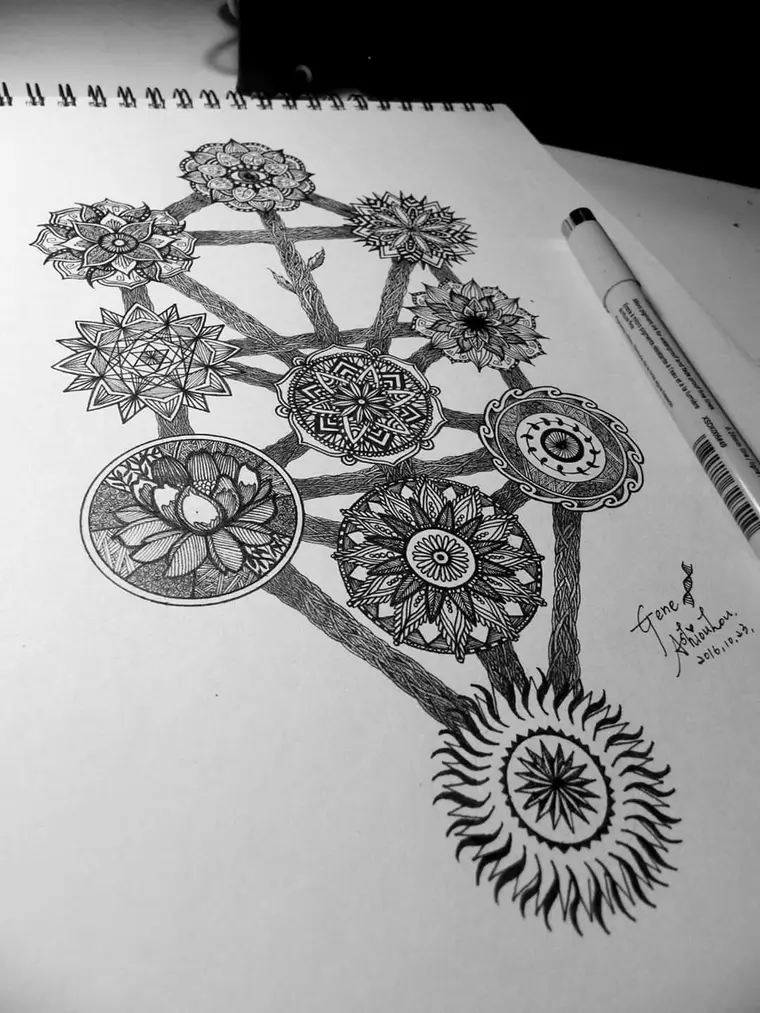
The Demiurge came back strongly in 20th-century esotericism. The Fraternitas Saturni made Saturn both the Demiurge and the liberating Lucifer. Luciferian currents read the serpent of Eden as the bearer of gnosis against the creator god. And medieval Kabbalah, which also speaks of sparks trapped in matter, is in dialogue with this view; see the guides to the Kabbalah and to Hermeticism, another tradition from the same Alexandrian milieu.
Sources and further reading
- Plato, Timaeus
- Apocryphon of John (Nag Hammadi Codices II, III, IV and Berlin Papyrus 8502)
- Hypostasis of the Archons (Nag Hammadi Codex II)
- Irenaeus of Lyon, Against Heresies (c. 180)
- Elaine Pagels, The Gnostic Gospels (1979)
- Karen L. King, What Is Gnosticism? (2003)
- Bentley Layton, The Gnostic Scriptures (1987)
Reviewed by the Chaos Society editorial team in November 2026.
Frequently asked questions
What is the Demiurge?
In Plato, it is the divine craftsman who orders the world. In several Gnostic texts it is a lesser god, ignorant or arrogant, who created the material world and believes himself the only God, unaware that a true God exists above him.
Who is Yaldabaoth?
The name of the Demiurge in the Apocryphon of John and other Sethian texts. He is born of Sophia without her partner's consent, has the form of a lion-headed serpent and declares: "I am a jealous God and there is no other God beside me".
Did all Gnostics see the Demiurge as evil?
No. In Sethian texts he is arrogant and hostile. For the Valentinians he was more ignorant than evil, and could even be redeemed. "Gnosticism" is a modern label for groups that were quite different from one another.