The Key of Solomon: origins, contents and importance in ceremonial magic

Chaos Society
Acervo de estudo · magia, ocultismo e esoterismo
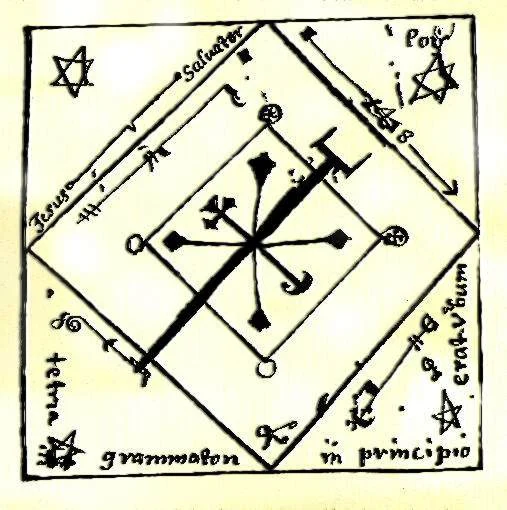
The Greater Key
The Clavicula Salomonis, the Key of Solomon, is the most copied grimoire of the European Renaissance. It survives in hundreds of manuscripts in Latin, Italian, French, English and other languages, each slightly different. It should not be confused with the Lemegeton, the Lesser Key, which contains the Goetia. The Key of Solomon is older, less interested in catalogues of demons and far more concerned with preparation, timing and tools.
Where it came from
The attribution to Solomon is legendary. The closest predecessor is the Hygromanteia, a group of 15th-century Byzantine Greek manuscripts in which Solomon teaches his son Rehoboam the planetary hours, the spirits of each day and the preparation of the magician. From there, Latin and Italian versions circulated in 15th- and 16th-century Italy. The records of the Venetian Inquisition show that copies of the Key were confiscated frequently, a sign of how sought-after they were.
Stephen Skinner and David Rankine, in The Veritable Key of Solomon (2008), compared several families of manuscripts and showed how the text changed from copy to copy.
What it teaches
Preparing the magician
Before any operation, the magician must purify himself: fasting, abstinence, baths, prayers and confession. The Key insists that the operation fails if the operator is not clean. It is a deeply Christian magic, in which power comes from God and the divine names.
Planetary days and hours
Each planet rules a day of the week and certain hours of each day. The Key teaches how to choose the right moment: Jupiter for wealth and honours, Venus for love, Mars for war, Saturn for operations of destruction and contact with the dead. You can calculate these hours for your city with the planetary hours.
Tools
The book describes how to make and consecrate the white-handled knife, the black-handled knife, the wand, the sword, the burin, the pen, the ink and the parchment. Each has its day, its hour and its prayer.
The pentacles
The best-known part is the planetary pentacles: circular figures with divine names, verses and symbols, in seven groups for the seven planets. They serve for protection and for obtaining favours linked to each planet. They connect with the planetary magic squares, which come from another source, Agrippa, but follow the same logic.
Mathers and the 1889 edition
In 1889 S. L. MacGregor Mathers published The Key of Solomon the King, assembled from British Library manuscripts. The edition has problems: Mathers combined different sources, left out parts he considered "black magic" and corrected what seemed wrong to him. But it was this edition that brought the Key to the Golden Dawn and, later, to the whole English-speaking occult world.
From the Key of Solomon to Wicca
Gerald Gardner, when he put Wicca together in the 1940s and 1950s, used Mathers' edition. The black-handled knife became the athame, the white-handled one the boline, and several consecration formulas were adapted. Many Wiccans do not know that their tools come from a Renaissance Solomonic grimoire. See the guide to Wicca.
The Key and the Goetia, side by side
- Key of Solomon (Greater Key): Renaissance, focused on purification, timing, tools and pentacles.
- Lemegeton (Lesser Key): 17th-century England, five parts, the first with the 72 spirits. Read the history of the Goetia.
To go further, see the guides to grimoires and ceremonial magic.
Sources and further reading
- Clavicula Salomonis, Latin and Italian manuscripts (15th–18th centuries)
- Hygromanteia (Greek manuscripts, 15th century)
- S. L. MacGregor Mathers, The Key of Solomon the King (1889)
- Stephen Skinner and David Rankine, The Veritable Key of Solomon (2008)
- Owen Davies, Grimoires: A History of Magic Books (2009)
- Joseph H. Peterson, critical editions at esotericarchives.com
Reviewed by the Chaos Society editorial team in November 2026.
Frequently asked questions
What is the Key of Solomon?
A Renaissance grimoire, the Clavicula Salomonis, that teaches how to prepare the magician, the tools and the pentacles, and how to choose planetary days and hours for each operation. It circulated in hundreds of manuscripts.
What is the difference between the Key of Solomon and the Goetia?
The Key of Solomon, or Greater Key, is older and deals with preparation and pentacles. The Goetia is the first part of the Lemegeton, the Lesser Key, a 17th-century English compilation with the catalogue of 72 spirits.
Where does the Wiccan athame come from?
From the Key of Solomon. The black-handled knife used to cast the circle appears in Mathers' 1889 edition, and Gerald Gardner brought it into modern witchcraft.