Yog-Sothoth: the gate, the key and the guardian in Lovecraft's mythos

Chaos Society
Acervo de estudo · magia, ocultismo e esoterismo
An entity made of time
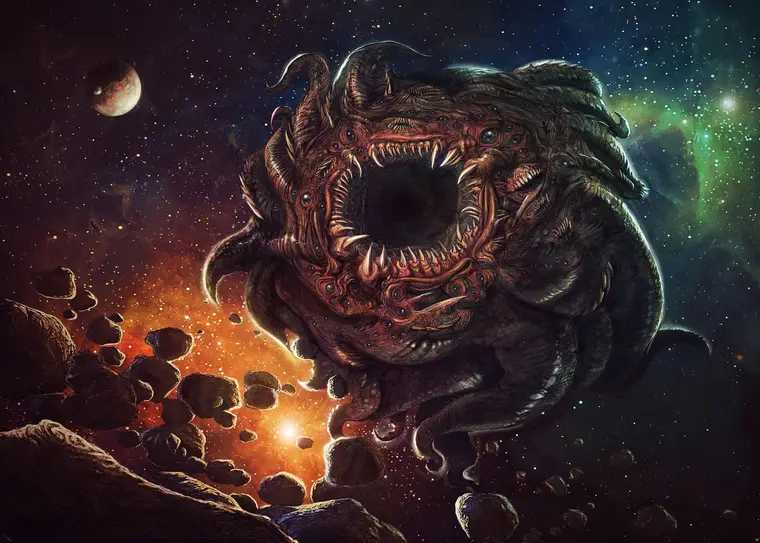
Among H. P. Lovecraft's creatures, Yog-Sothoth is the most abstract. Cthulhu has tentacles and a sunken city; Yog-Sothoth is almost pure concept: a presence coexistent with all time and all space, who knows past and future because he is in every moment at once. The most quoted formula, attributed to the Necronomicon in The Dunwich Horror, sums it up: "Yog-Sothoth knows the gate. Yog-Sothoth is the gate. Yog-Sothoth is the key and guardian of the gate".
The debut: Charles Dexter Ward
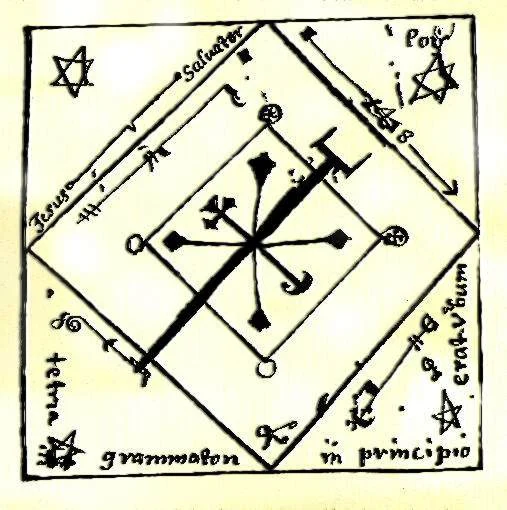
The name first appears in The Case of Charles Dexter Ward, a short novel Lovecraft wrote in 1927 that was only published in 1941, after his death. Joseph Curwen, an 18th-century sorcerer, uses formulas invoking Yog-Sothoth to raise the dead from their "essential salts". The formulas, with the Dragon's Head and Tail and the phases of the Moon, mix real astrological terms with invented syllables.
The Dunwich Horror
Published in Weird Tales in 1929, The Dunwich Horror gives Yog-Sothoth his best-known role. In a decaying New England village, Lavinia Whateley bears twins by an entity summoned by her father: Wilbur, almost human, and an invisible, immense brother who grows hidden in the house. Wilbur seeks a complete copy of the Necronomicon to open the way for the Old Ones. The story is a dark retelling of the birth of a demigod, and many critics read it as an inverted parody of the Gospels.
The All-in-One
In Through the Gates of the Silver Key (1934), written with E. Hoffmann Price, Randolph Carter passes through the First and Ultimate Gates and meets an entity that is at once himself and everything that exists. The text calls this being the All-in-One and One-in-All, and the guardian of the gate, 'Umr at-Tawil, appears as an avatar. Here Yog-Sothoth comes close to a mystical vision of the absolute, very different from the monster of Dunwich. Lovecraft was a committed materialist, and his biographer S. T. Joshi reminds us that he used these themes as cosmic horror, not as belief.
From fiction to practice
Invented though he is, Yog-Sothoth entered magic. Three routes explain it:
- Kenneth Grant, Crowley's disciple, read Lovecraft's mythos as dreamed intuitions of real forces and incorporated its entities into his Typhonian current, in books such as Nightside of Eden (1977).
- The "Simon" Necronomicon (1977), a modern book mixing Mesopotamian mythology with Lovecraftian names, gave many people the feeling of a real grimoire.
- Chaos magic, which treats beliefs as tools, welcomed the Old Ones as working forms. Phil Hine, in The Pseudonomicon (1994), proposes Lovecraftian practices fully aware of their literary origin.
For the chaos practitioner, the fictional origin is no problem: an entity with millions of readers carries an enormous symbolic charge. Yog-Sothoth, as gate and key, is often used in work on time, thresholds and shifts of perspective.
Going further
Understand the logic that makes it possible to work with fictional entities in chaos magic: what it is and in the guide to servitors.
Sources and further reading
- H. P. Lovecraft, The Case of Charles Dexter Ward (written 1927, published 1941)
- H. P. Lovecraft, The Dunwich Horror (Weird Tales, 1929)
- H. P. Lovecraft and E. Hoffmann Price, Through the Gates of the Silver Key (1934)
- S. T. Joshi, I Am Providence (2010)
- Kenneth Grant, Nightside of Eden (1977)
- Phil Hine, The Pseudonomicon (1994)
Reviewed by the Chaos Society editorial team in November 2026.
Frequently asked questions
Who is Yog-Sothoth?
One of the cosmic entities created by H. P. Lovecraft. He is described as coexistent with all time and space, "the gate, the key and guardian of the gate", a presence that exists outside ordinary dimensions.
Which stories does Yog-Sothoth appear in?
The first mention is in The Case of Charles Dexter Ward, written in 1927. His best-known role is in The Dunwich Horror (1929), as the father of Wilbur Whateley and his invisible brother. He also appears in Through the Gates of the Silver Key (1934).
Is Yog-Sothoth used in magic?
Yes, as a working figure, especially in chaos magic and in Kenneth Grant's Typhonian current. Practitioners know his origin is literary and treat him as a powerful thought-form or a symbolic gateway.