Pombagira: origins, Maria Padilha and her role in Umbanda and Quimbanda

Chaos Society
Acervo de estudo · magia, ocultismo e esoterismo
An entity surrounded by stereotypes
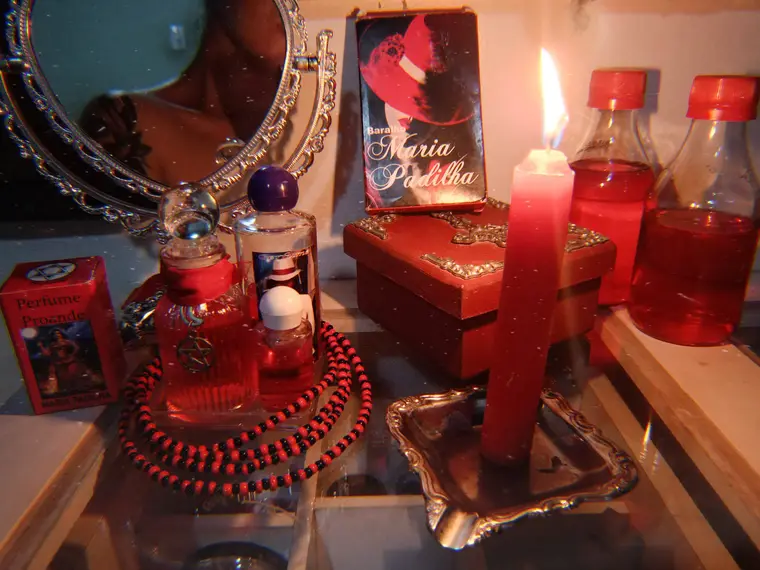
Few Brazilian religious figures are as misunderstood as the pombagira. To outsiders, she is the "entity of seduction", sometimes mistaken for something diabolical. To those who attend Umbanda and Quimbanda, she is a counsellor, protector and opener of paths, who speaks frankly about love, money, dignity and survival. Understanding where she comes from helps you see past the stereotype.
Pambu Njila: the name
The name comes from Pambu Njila, the nkisi of the crossroads in Angola-nation Candomblé, of Bantu origin. It corresponds to the Exu of the Yoruba: the messenger, the master of the roads. In Brazilian Portuguese, Pambu Njila became Bombogira and then Pombagira, and in the process came to designate not the male nkisi but female entities in the line of the exus. The anthropologist Stefania Capone shows how these transformations accompanied the formation of Umbanda in the 20th century.
Maria Padilha: from the court of Castile to the terreiro
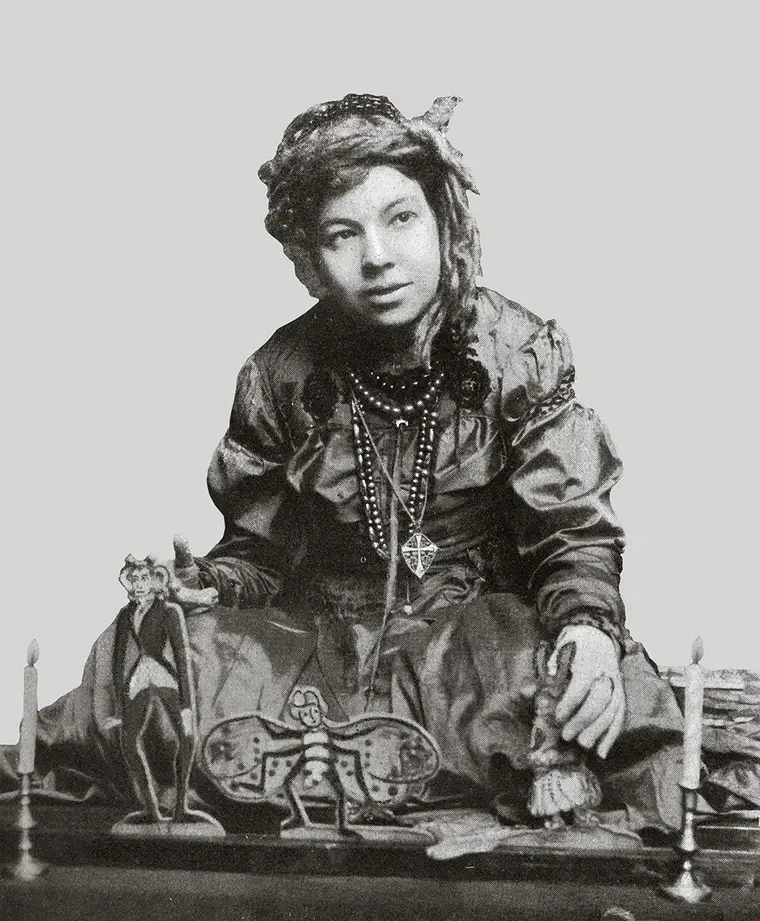
The most famous pombagira, Maria Padilha, has a surprising genealogy. María de Padilla was a 14th-century Castilian noblewoman, mistress of King Peter I of Castile, who after her death recognised her as his wife. Her fame as a woman who ruled a king made her a character in love prayers in Spain and Portugal.
The scholar Marlyse Meyer, in Maria Padilha e toda a sua quadrilha (1993), traced these prayers in the trials of the Portuguese Inquisition: women accused of sorcery called on "Maria Padilha and all her band" to bind a lover. Exiles took these prayers to Brazil, where Laura de Mello e Souza also found them. In the 20th century, Maria Padilha became a pombagira in the terreiros, a queen among the entities of the left.
Her role in Umbanda and Quimbanda
In Umbanda, pombagiras work in the so-called left-hand line, alongside the exus, in sessions of their own. They help undo curses, open paths, resolve love problems and protect against violence. Many have life stories of marginalised women, prostitutes, widows, betrayed wives, and so they speak with authority about suffering and resistance.
In Quimbanda, a cult centred on exus and pombagiras, they are even more prominent, with their own hierarchies, kingdoms and foundations. Names such as Maria Padilha, Sete Saias, Rainha das Sete Encruzilhadas, Maria Mulambo and the Cigana appear in both contexts, with variations from house to house.
Sexuality, power and prejudice
Scholars such as Monique Augras and Kelly Hayes, in Holy Harlots (2011), show that the pombagira embodies a femininity society condemns: free, sexual, independent. At the same time, the women who receive or consult her find in her the strength to face domestic violence and abandonment. The image of an "evil entity" comes from that discomfort, and from the same prejudice that for decades called Afro-Brazilian religions black magic, the subject of the black magician: what the term meant.
Respecting the foundations
- The pombagira is not a self-help character: she has foundations, and offerings and workings are learned in a terreiro, from those responsible for the house.
- Each house has its rules. What applies in one may not apply in another.
- She is not Lilith, nor Venus, nor Lucifer. Comparisons can help you think, but they do not replace the tradition.
To go further, see the guide to spiritual protection.
Sources and further reading
- Marlyse Meyer, Maria Padilha e toda a sua quadrilha (1993)
- Monique Augras, studies on the pombagira and female sexuality
- Kelly E. Hayes, Holy Harlots: Femininity, Sexuality, and Black Magic in Brazil (2011)
- Stefania Capone, La quête de l'Afrique dans le candomblé (1999)
- Reginaldo Prandi, Herdeiras do Axé (1996)
- Laura de Mello e Souza, O Diabo e a Terra de Santa Cruz (1986)
Reviewed by the Chaos Society editorial team in November 2026.
Frequently asked questions
What is a pombagira?
A female entity of Umbanda and Quimbanda, the female counterpart of the exu. She works with paths, love, protection and advice about life, and manifests through mediums in left-hand sessions.
Where does the name pombagira come from?
From the Bantu word Pambu Njila, the name of the nkisi of the crossroads in Angola-nation Candomblé, equivalent to the Yoruba Exu. The name was adapted in Brazilian Portuguese.
Who was Maria Padilha?
María de Padilla was a 14th-century Castilian noblewoman, mistress of King Peter I of Castile. Her name passed into Iberian love prayers, reached colonial Brazil and today designates one of the best-known pombagiras.