The Goetia: the history of Solomon's book of 72 spirits

Chaos Society
Acervo de estudo · magia, ocultismo e esoterismo
What the Goetia is
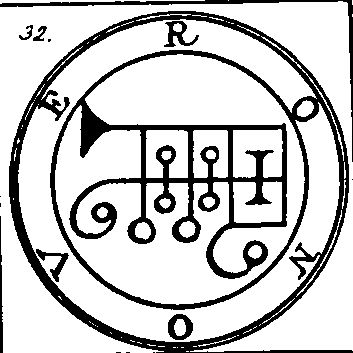
The Ars Goetia is a manual for evoking 72 spirits, each with a name, a rank (king, duke, marquis, president, earl), an appearance, powers, a number of legions and a seal of its own. It is the first of the five parts of the Lemegeton Clavicula Salomonis, the Lesser Key of Solomon. The other four are the Ars Theurgia-Goetia, the Ars Paulina, the Ars Almadel and the Ars Notoria.
The word comes from the Greek goēteia, the art of the goēs, the sorcerer who wails and calls up the dead. Even in antiquity it was a disparaging term, opposed to theurgy, the "divine work" of the philosophers.
The legend: Solomon and the ring
The idea that King Solomon commanded demons is much older than the book. The Testament of Solomon, a Greek text from the early centuries of the Christian era, tells how the archangel Michael gave the king a ring with a seal that could bind spirits, who were forced to work on the building of the Temple. Each demon introduces itself, gives its name and reveals which angel defeats it. The catalogue format, spirit by spirit, is already there.
The direct source: Johann Weyer
The immediate predecessor of the Goetia is the Pseudomonarchia Daemonum, which the physician Johann Weyer published in 1577 as an appendix to his De praestigiis daemonum. Weyer was a critic of the witch hunts: he wanted to expose the credulity of magicians, and so he printed the list that was circulating in manuscript. The irony is that by publicising it, he gave it a long life.
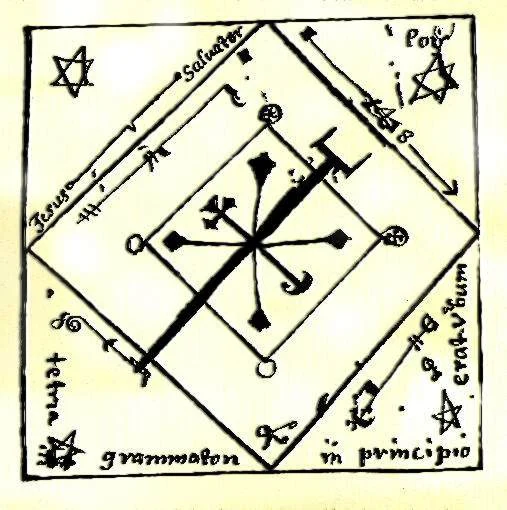
Weyer's list has 69 spirits. In 1584 Reginald Scot translated it into English in The Discoverie of Witchcraft, and that is probably how it reached the English compilers. The Goetia follows the same structure, but changes the order, adds Vassago, Seere, Dantalion and Andromalius and leaves out Pruflas. The seals also come from the Goetia; Weyer does not include them.
The 17th-century manuscripts
The Lemegeton survives in 17th-century English manuscripts held at the British Library, chiefly Sloane 2731 and 3825. The versions differ in spellings, seals and ritual details. There is no "original": there is a family of copies, each copyist correcting and adding. Joseph Peterson's critical edition (2001) compares these sources and is the best starting point for anyone who wants the text without the later layers.
Mathers, Crowley and modern fame
The Goetia became famous with The Book of the Goetia of Solomon the King, published in 1904. The translation and transcription were by S. L. MacGregor Mathers of the Hermetic Order of the Golden Dawn, but it was Aleister Crowley, by then estranged from him, who published it. Crowley added an introduction reading the spirits as "portions of the human brain", a psychological interpretation that still influences practitioners today, along with invocations in Enochian.
From then on the Goetia entered the circuit of modern ceremonial magic, picked up correspondences with the 72 angels of the Shem ha-Mephorash and the decans of the zodiac, and became the most quoted grimoire in pop culture.
What the Goetia is, and what it is not
- It is not an ancient text. The legend is ancient; the book as we know it is from the 17th century.
- It is not a fixed list. Names, appearances and seals vary between Weyer, the manuscripts and Mathers.
- It does not include Lucifer among the 72. The explanation is in why Lucifer is not in the Goetia.
- It is a Christian ritual of command. The operator conjures in the name of God, inside a circle, and compels the spirit to obey. Modern approaches based on alliance with the spirits are something else: demonolatry.
Going further
Browse the 72 spirits, with the rank and source of each, in the Goetia catalogue, compare them with the 72 angels of the Shem ha-Mephorash, and see the other, much older "key" attributed to Solomon in the Key of Solomon.
Sources and further reading
- Testament of Solomon (Greek text, early centuries AD)
- Johann Weyer, Pseudomonarchia Daemonum (1577)
- Reginald Scot, The Discoverie of Witchcraft (1584)
- Lemegeton, manuscripts Sloane 2731 and 3825, British Library
- S. L. MacGregor Mathers and Aleister Crowley, The Book of the Goetia of Solomon the King (1904)
- Joseph H. Peterson, The Lesser Key of Solomon (2001)
Reviewed by the Chaos Society editorial team in November 2026.
Frequently asked questions
Who wrote the Goetia?
Nobody knows. The attribution to Solomon is legendary. The text we have is a 17th-century English compilation built from earlier sources, above all the list of demons Johann Weyer published in 1577.
What is the difference between the Goetia and the Lemegeton?
The Lemegeton, or Lesser Key of Solomon, is the whole collection, in five parts. The Ars Goetia is the first part, the one that describes the 72 spirits, their seals and how to evoke them.
Why are there 72 spirits?
The number already appears in the Solomonic tradition and matches the 72 divine names of the Kabbalah, the Shem ha-Mephorash. Weyer's list had 69 names; the Goetia added some and dropped one to reach 72.