The magic of Éliphas Lévi: astral light, will, Baphomet and tarot

Chaos Society
Acervo de estudo · magia, ocultismo e esoterismo
The man who reinvented magic
Alphonse-Louis Constant (1810–1875) trained for the priesthood, left the seminary, became a socialist activist, was jailed for his writings and, in the 1850s, re-emerged as Éliphas Lévi, author of books on magic. His Dogma and Ritual of High Magic, published in two volumes between 1854 and 1856, turned a scattered mass of grimoires, Kabbalah and alchemy into a coherent system. Nearly all later ceremonial magic, from the Golden Dawn to Crowley, starts from him.
The principles
The astral light
For Lévi there is a universal force that permeates everything, midway between spirit and matter, which he calls the astral light or the great magical agent. It stores the images of everything that has happened and responds to human will. Dreams, visions, magnetism and the effects of ritual would all be movements of this light.
The trained will
The astral light obeys those with a firm will. That is why the magician must be disciplined: fasting, temporary chastity, silence, regularity. Lévi insists that magic is above all an education of the will, and that ritual exists to concentrate it.
Imagination
The will acts through images. Symbols, colours, perfumes and words give shape to what is wanted and fix the attention. That is why ritual must be careful and coherent.
Balance
Everything is held together by the tension between opposites: active and passive, light and shadow, severity and mercy. The magician is the one who stands at the point of balance. Hence the importance of the number two and of the two pillars of the Temple, Jachin and Boaz, in his system.
The symbols he fixed
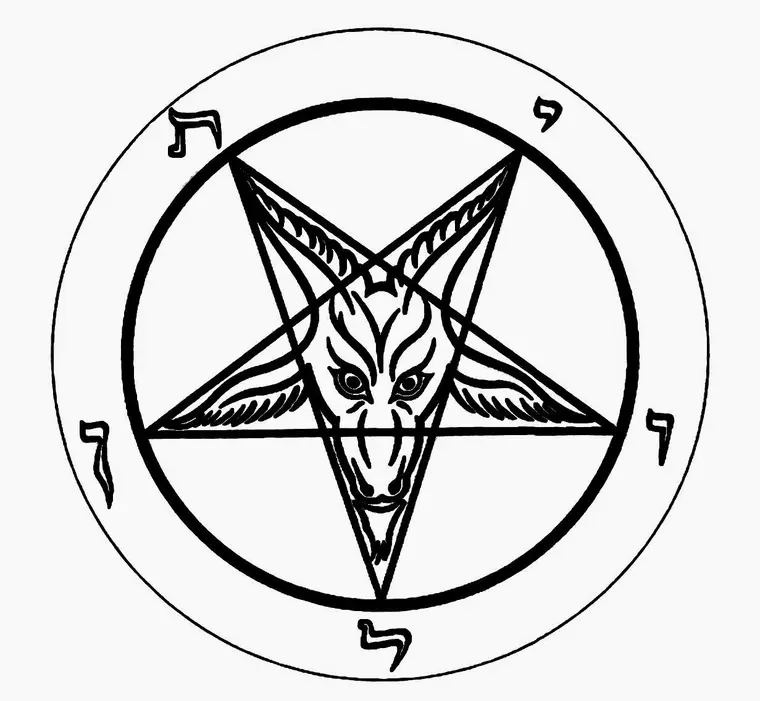
- The pentagram. With one point up, it is the human being ruling the elements through spirit; inverted, with two points up, it is the goat, matter ruling spirit. That moral reading of the inverted pentagram comes from Lévi. See the guide to the pentagram.
- Baphomet. The goat-headed figure with wings, breasts, arms pointing up and down and the words solve and coagula was drawn by Lévi. It represents the synthesis of opposites, not the devil. The name came from the accusations against the Templars.
- Tarot and Hebrew. Lévi linked the 22 major arcana to the 22 letters of the Hebrew alphabet, turning the tarot into a book of Kabbalah. The idea was adopted, with changes, by the Golden Dawn and survives in today's decks. See the tarot card meanings.
The practice
The Ritual, the second part of the book, covers preparation, the consecration of tools, pentacles, invocations of the elements and evocations. The most famous is the evocation of Apollonius of Tyana, which Lévi says he performed in London in 1854: after weeks of preparation, a figure supposedly appeared, and he came out of the ritual exhausted and with a numb arm. Lévi concludes cautiously: he does not claim to have seen Apollonius, only that he saw something, and he advises anyone unprepared against trying it.
That caution is typical. Lévi writes about everything, but distrusts those who want quick results.
Influence
A. E. Waite's translation, Transcendental Magic (1896), brought Lévi to English readers. The Golden Dawn adopted his principles, Papus systematised them in France and Crowley claimed to be his reincarnation. Lévi's other books develop the project further, especially The Key of the Mysteries. To study the path he opened, see the guide to ceremonial magic.
Sources and further reading
- Éliphas Lévi, Dogme et Rituel de la Haute Magie (1854–1856)
- Éliphas Lévi, Histoire de la Magie (1860)
- A. E. Waite (trans.), Transcendental Magic (1896)
- Christopher McIntosh, Eliphas Lévi and the French Occult Revival (1972)
- Antoine Faivre, Access to Western Esotericism (1994)
Reviewed by the Chaos Society editorial team in November 2026.
Frequently asked questions
Who was Éliphas Lévi?
The pen name of Alphonse-Louis Constant (1810–1875), a former French seminarian who became the leading occult author of the 19th century. His Dogma and Ritual of High Magic is considered the starting point of modern ceremonial magic.
What is the astral light for Lévi?
A universal force, midway between spirit and matter, that stores images and can be moved by will and imagination. According to Lévi, it is the medium through which magic acts.
Did Lévi create Baphomet?
He created the image we know: the goat-headed figure with wings, breasts and a pentagram on its forehead, published in Dogma and Ritual. The name Baphomet is older and appears in the accusations against the Templars in the 14th century.